
RBCS articles
Delineation of potential management zones for cowpea by factorial kriging and spatial Fuzzy C-Means of yield and soil chemical and texture properties
Published on
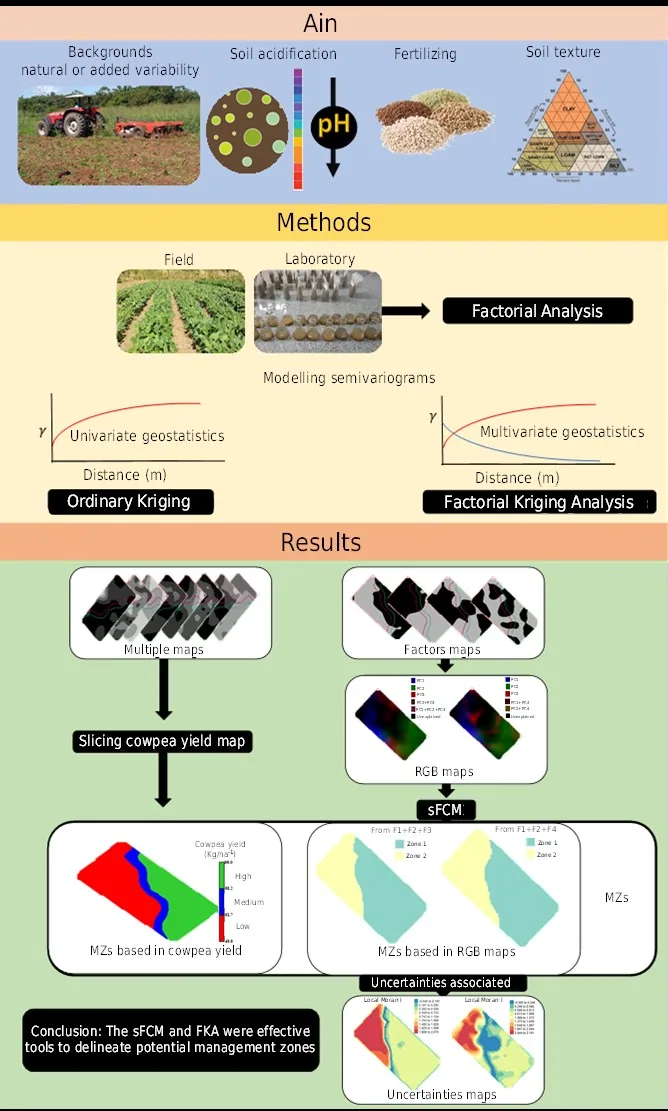
HIGHLIGHTS
Maps of soil properties alone were not efficient in delineating management zones
Factorial kriging analysis can be used in cokriging to estimate soil properties
Factorial kriging and sFCM were efficient in delineating the two management zones
Is possible to solve problems of multiple soil property maps with FK and SFCM
ABSTRACT
In precision agriculture, accurate delineation of management zones and understanding spatial variability of soil properties and crop yields are critical for optimizing resource allocation and improving productivity. Spatial variability of different environmental factors (soil and plants) is evident in several studies. Associations between the texture and chemical properties of the soil and cowpea yield have been tested, but a large, unexplained variance of ranges between kriged maps is usually reported. This suggests that a deeper exploration into the soil properties of these spatial interactions may help develop our understanding on how to reduce the number of soil property maps to delineate management zones and simplify interpretation. The main objective of this study was to investigate whether factorial kriging analysis can be used as an auxiliar variable to cokriging of soil properties and cowpea yield, and what is the potential of Spatial Fuzzy c-Means associated with factorial kriging analysis to delineate management zones. This study employed factor maps and spatial clustering to classify the cowpea field in management zones based on a multivariate and geostatistical analysis using soil texture and chemical properties. From Farmer, 66 soil samples were collected at a layer of 0.00-0.20 m, at points with a regular spacing of 12 m, at Agropecuária Milênio in the municipality of Tracuateua, Pará State, to make the technology applicable to the most common data available to farmers. It also used Spatial Fuzzy c-Means to generate estimated maps. Only the kriged maps of soil properties were inefficient in delineating management zones. Factor maps and Spatial Fuzzy c-Means were efficient in delineating the two management zones. Factorial kriging analysis can be used in cokriging to estimate soil properties and the cowpea field. The proposed method is a practical tool to delineate management zones, performing better and more efficiently compared with soil multiple property maps. The optimal number of management zones for cowpea cultivation was determined to be two. This encompasses soil management, yield considerations, and site-specific choices, all aimed at mitigating the impacts of precision agriculture on high productivity.
Read articleSee also
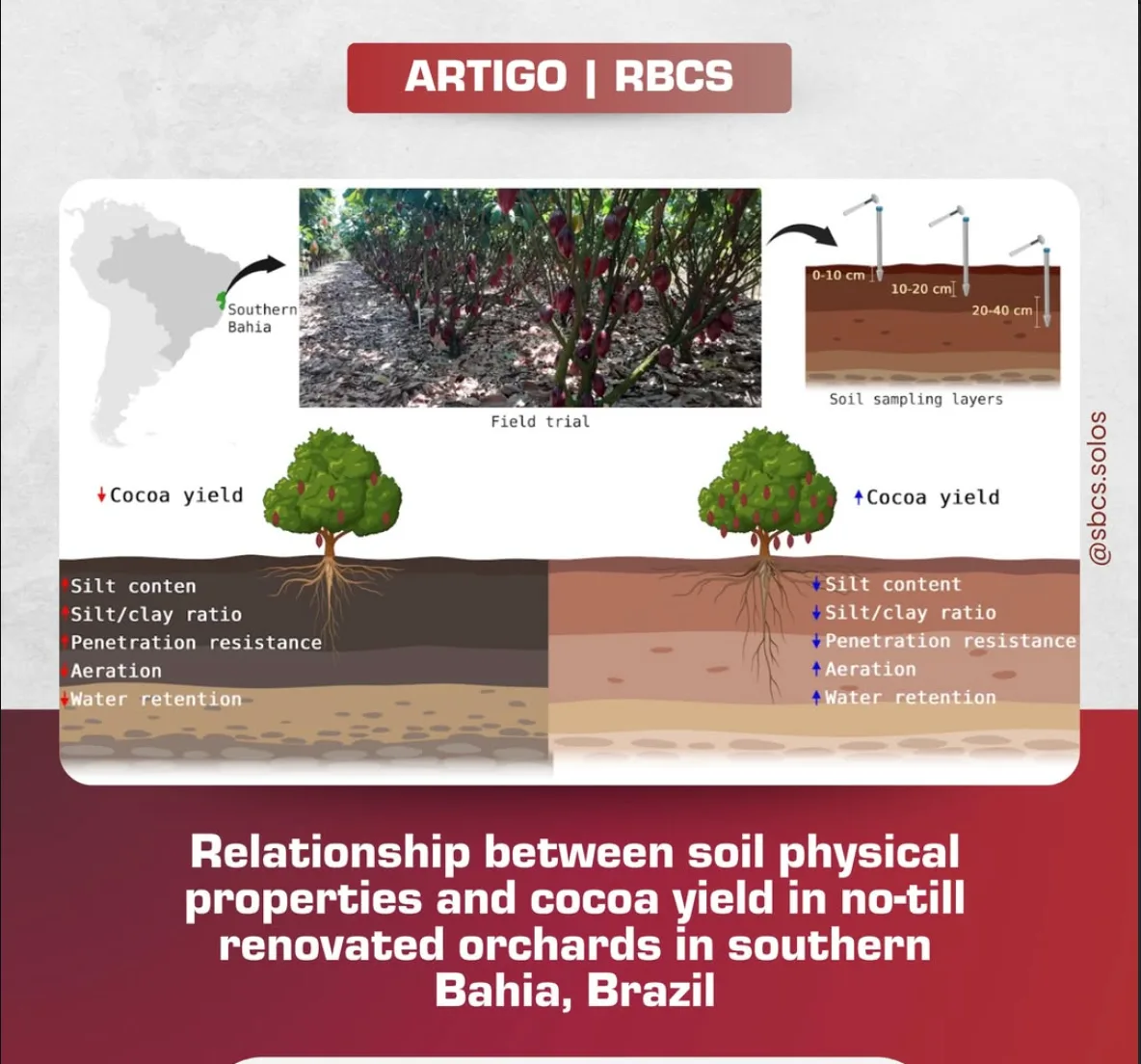
What makes a cacao tree produce more than 2,700 kg/ha?
In southern Bahia, the renewal of old orchards is the key to the future of cocoa farming. But a recent study published in the Brazilian Journal of Soil Science (RBCS) reveals that success depends not only on plant…
Read more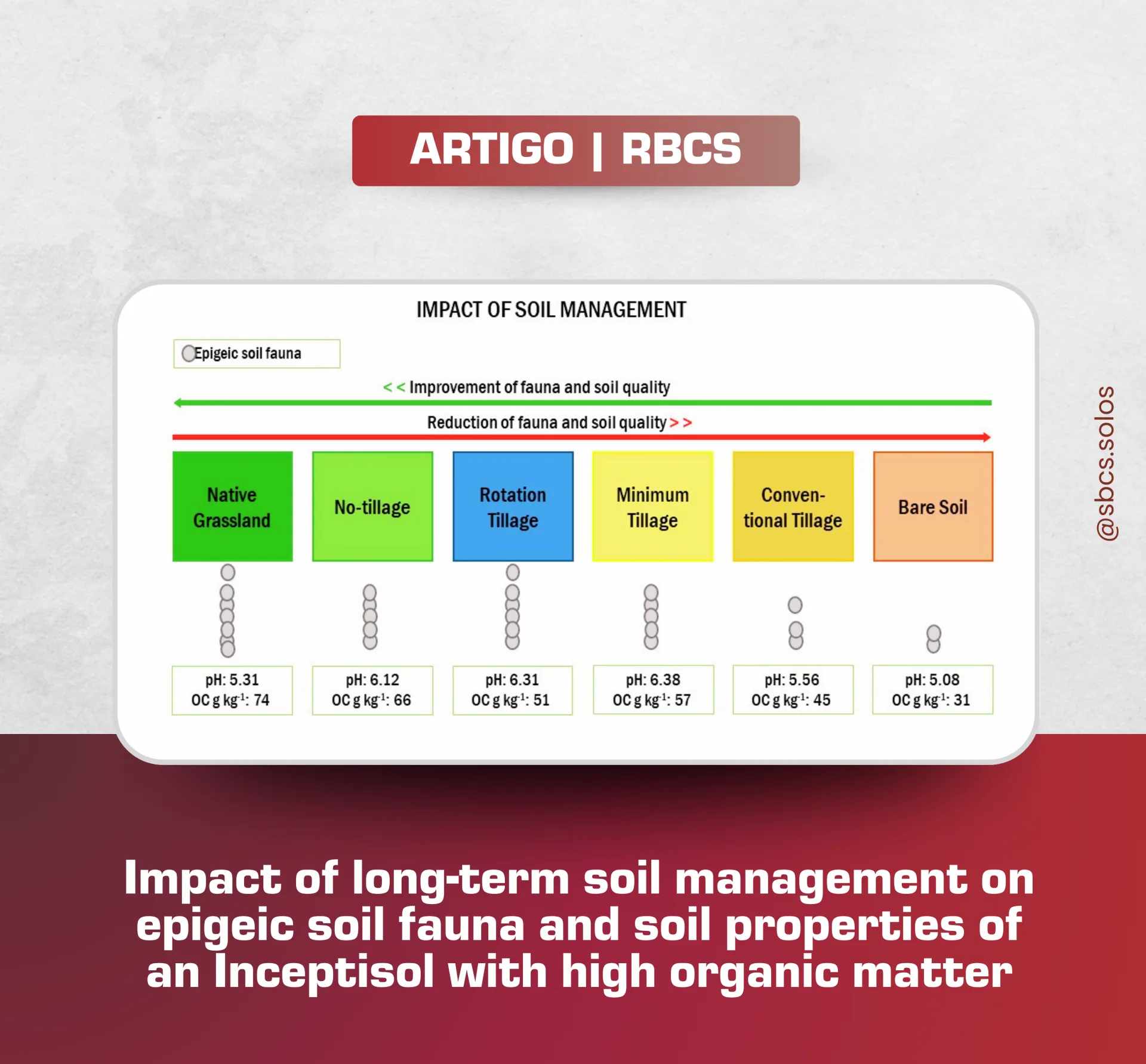
Impact of long-term soil management on epigeic soil fauna and soil properties of an Inceptisol with high organic matter
📘 New article in the Revista Brasileira de Ciência do Solo (RBCS) Impact of long-term soil management on epigeic soil fauna and soil properties of an Inceptisol with high organic matter Authors: Neuro Hilton Wolschick,…
Read more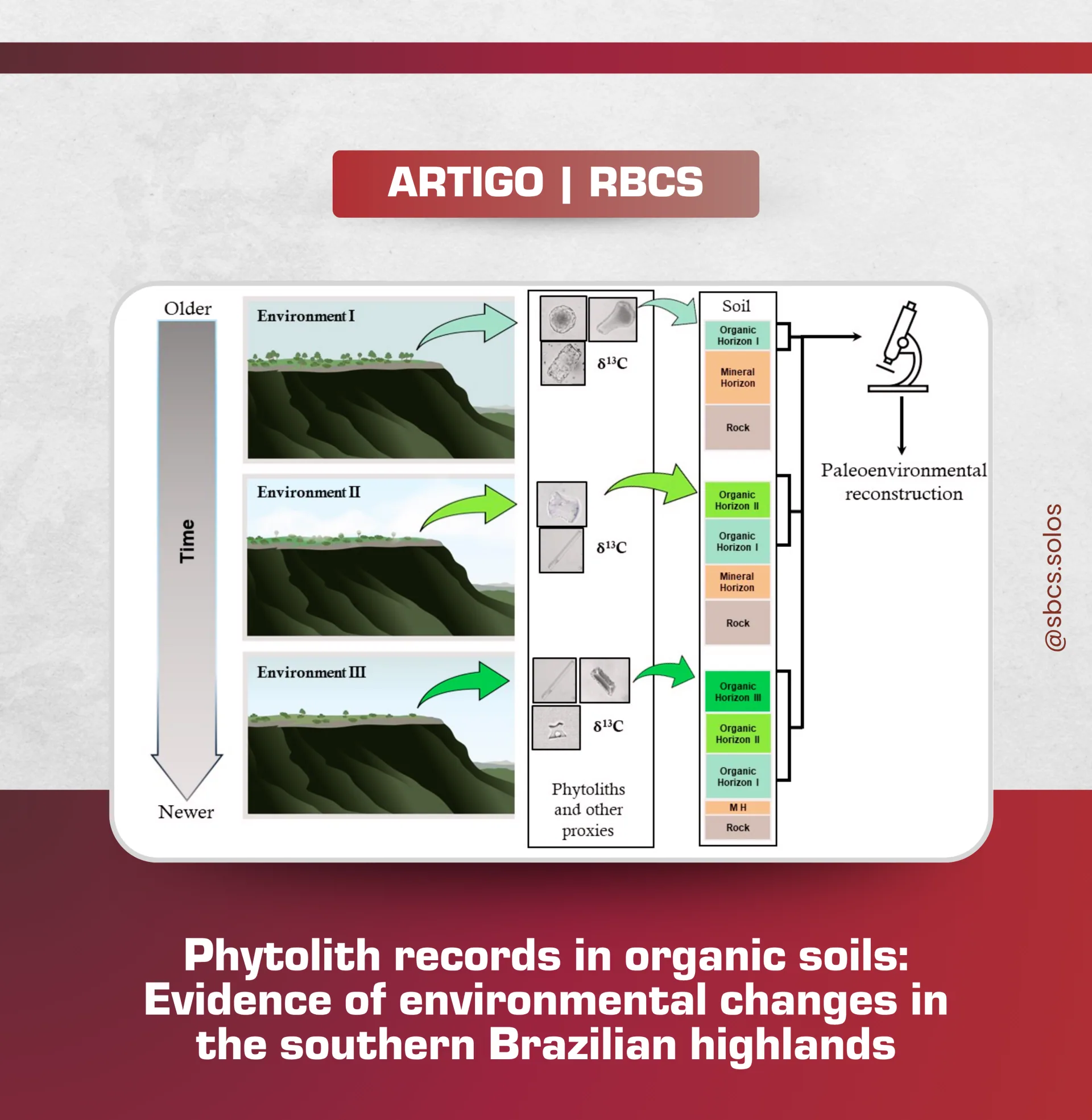
Phytolith records in organic soils: Evidence of environmental changes in the southern Brazilian highlands
📘 New article in the Revista Brasileira de Ciência do Solo (RBCS) Phytolith records in organic soils: Evidence of environmental changes in the southern Brazilian highlands Authors: João Pedro Comendouros Scott, Carlos…
Read more