
Drill cuttings from oil exploration improve properties of substrate and growth of Ipê-branco (Tabebuia roseoalba) seedlings
Published on
HIGHLIGHTS
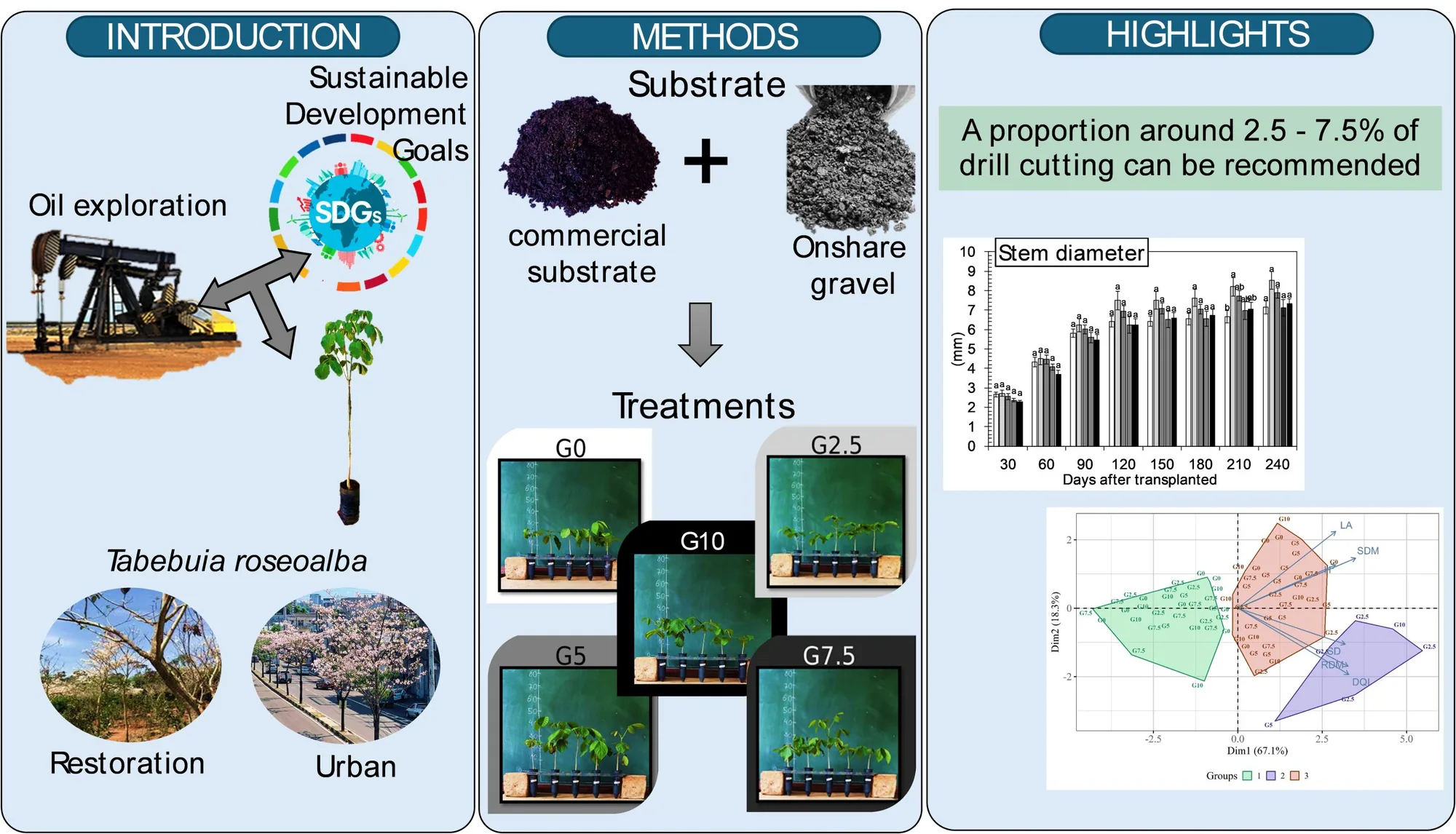
Substrates with drill cuttings were evaluated for forest seedlings.
The addition of drill cuttings led to substrates with higher nutrient concentrations.
Heavy metals concentrations in the substrates were below the toxic ranges.
The seedlings’ growth and quality were improved by the addition of drill cuttings.
A proportion around 2.5 and 7.5% of drill cutting can be recommended.
ABSTRACT
More information is needed on the potential of using drill cuttings (crushed rocks) from the oil industry in agriculture and forestry. An experiment in forest nursery was carried out to evaluate the influence of substrates formulated from onshore gravel on characteristics of Ipê-branco (Tabebuia roseoalba) seedlings (i.e., growth, quality, and nutrition). We used five gravimetric proportions of gravel from drill cuttings mixed with Pinus-bark – commercial substrate (Mecplant® Florestal 3): control with only commercial substrate and zero gravel (G0), 2.5 % gravel (G2.5), 5 % gravel (G5), 7.5 % gravel (G7.5), and 10 % gravel (G10). In general, high proportion of drill cuttings increases density and decrease current moisture and total porosity of the formulated substrates. The drill cuttings proportions G2.5, G5 and G7.5 significantly contributed to the available water and readily available water in these substrates, with percentage values ranging 23 – 30 % higher than the G10 substrate. Increasing the gravel proportion generally resulted in increased pH levels, P, Na, K and metals (Cu, Fe, Ni, Mn, Cd, Zn, Cr and Pb), except for Ca and Mg nutrients that decreased. Heavy metal contents in all substrates did not exceed the permissible values in legal standards. The G2.5 and G5 substrates increased by 20 % approximately the stem diameter and height of seedlings, and G2.5 proportion also affected the root dry mass and Dickson quality index, with values two times higher than G0 substrate. Multivariate analysis proved suitable as a complementary approach to evaluate the seedling quality. Drilling cuttings addition, in general, increased the accumulation of nutrients and heavy metals of the Ipê-branco seedlings, and G2.5 and G5 substrates provided the greatest accumulation of the nutrients P, Ca, Pb and Zn in the shoot, while G2.5 proportion contributed with higher accumulation of N, Ca, Fe, Cr, Mn and Pb in the root. Adding drill cuttings as a conditioning component of the substrate at 2.5 and 5 % proportions is a viable alternative for using this residue to produce high-quality Tabebuia roseoalba seedling.
Read articleSee also
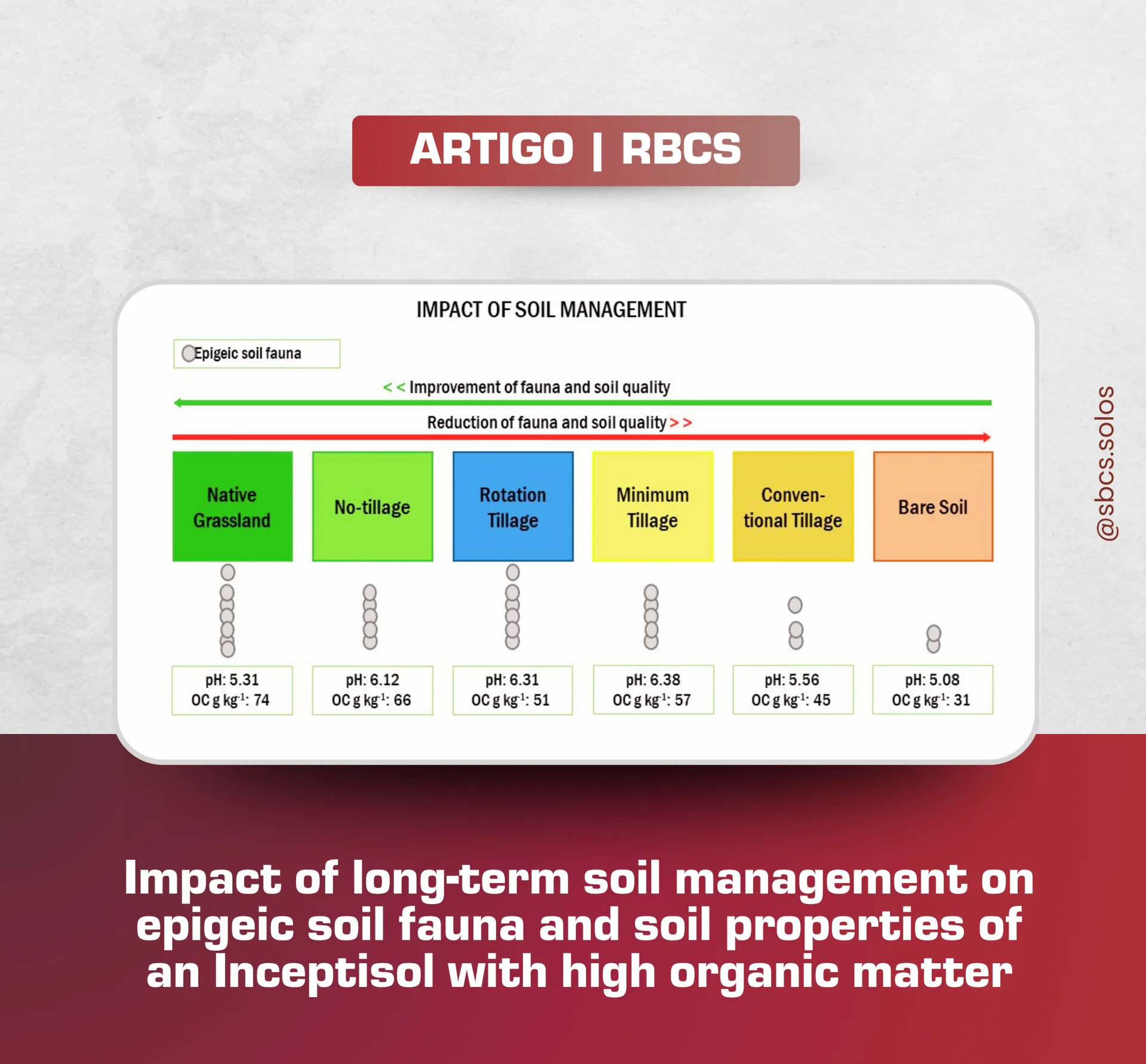
Impact of long-term soil management on epigeic soil fauna and soil properties of an Inceptisol with high organic matter
📘 New article in the Revista Brasileira de Ciência do Solo (RBCS) Impact of long-term soil management on epigeic soil fauna and soil properties of an Inceptisol with high organic matter Authors: Neuro Hilton Wolschick,…
Read more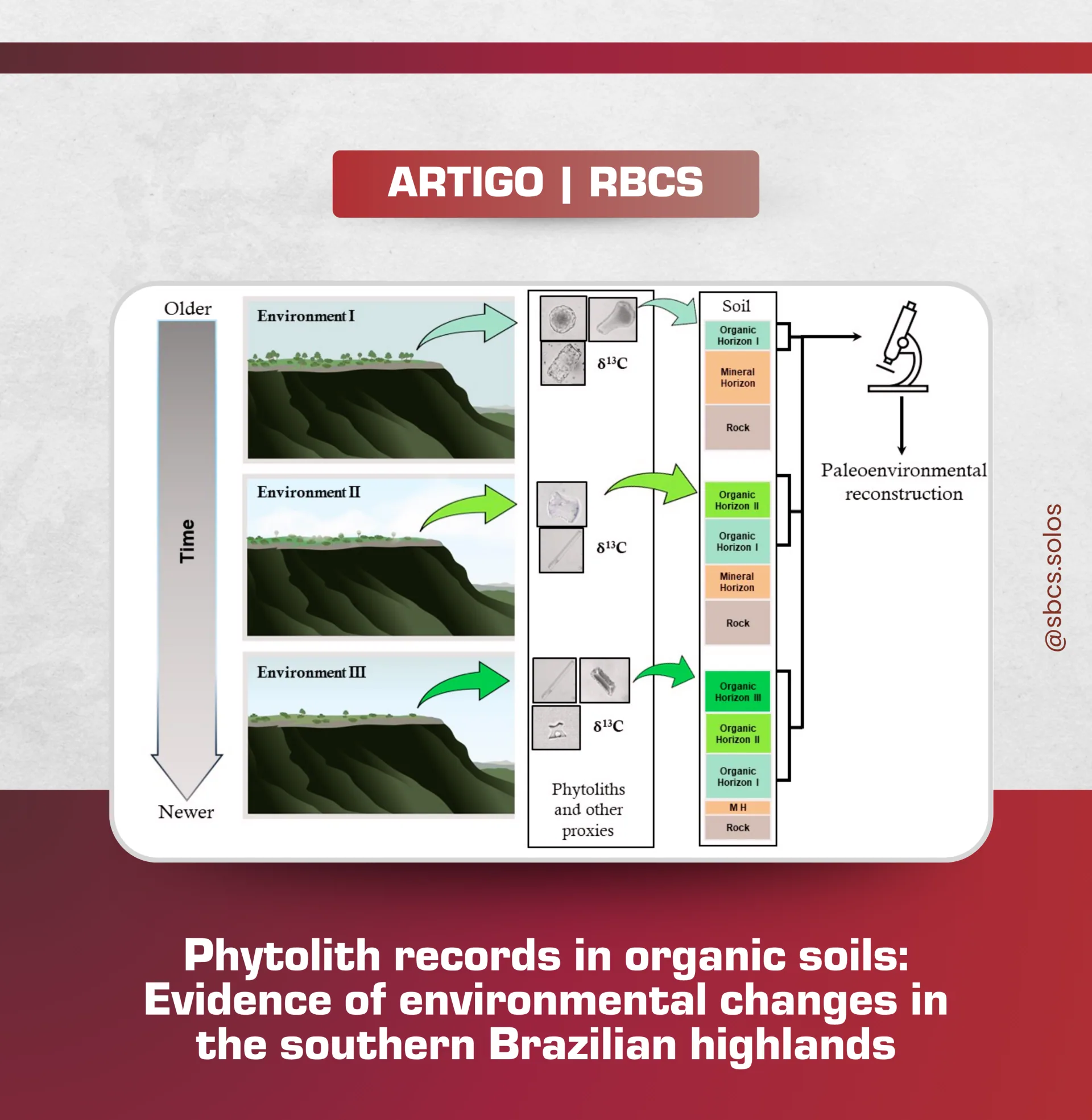
Phytolith records in organic soils: Evidence of environmental changes in the southern Brazilian highlands
📘 New article in the Revista Brasileira de Ciência do Solo (RBCS) Phytolith records in organic soils: Evidence of environmental changes in the southern Brazilian highlands Authors: João Pedro Comendouros Scott, Carlos…
Read more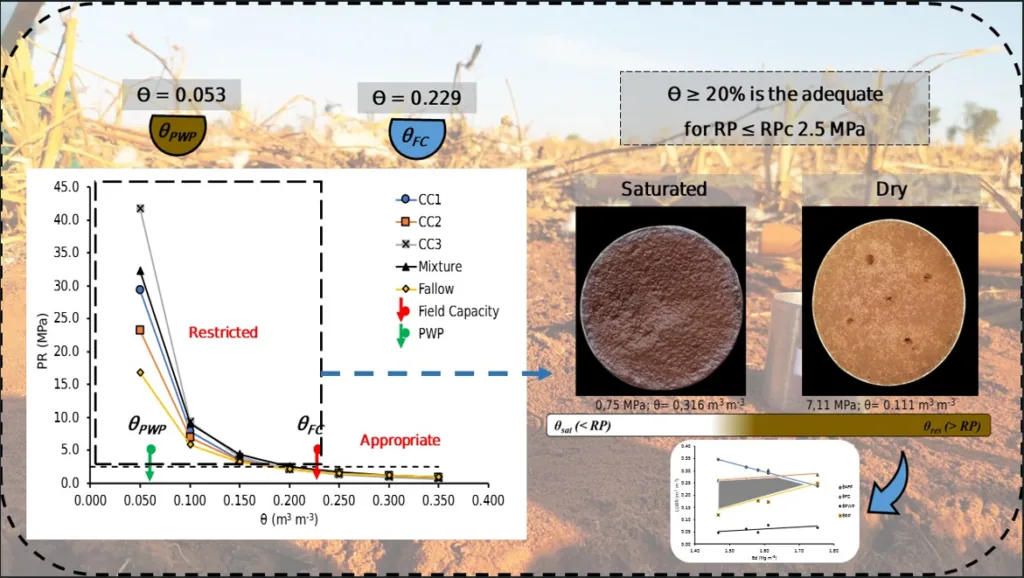
Cover crops influence the physical hydric quality of a tropical sandy soil under no-tillage cotton cropping
HIGHLIGHTS The results of this study suggest that from the physical properties of the soil analysed, only the PR was influenced by the use of cover crops. At the surface physical limitations due to aeration occurred…
Read more