Blog
What is a scientific review worth?
Published on
Anyone who has served as editor of a scientific journal knows the situation well. A manuscript arrives, passes the initial editorial screening, and seems interesting enough to go out for peer review. Then begins a stage that often becomes the most difficult part of the whole process: finding qualified researchers willing to review it. We invite two, three, five, ten researchers. Some decline. Many do not even reply. It is not unusual for a paper to sit in the system for weeks, not because it is under review, but simply because we have not yet found anyone willing to review it.
As an associate editor of the Revista Brasileira de Ciência do Solo, I have felt this problem ever more acutely. In 2025, Nature ran a feature on what it called the peer-review crisis. Scientific output and the number of submissions have grown, but the time researchers have available to evaluate them has not grown at the same pace (Adam, 2025). The result is an increasingly overloaded system. Perhaps it is time to discuss a central question: why not pay reviewers?
A good review takes a great deal of work. The reviewer must understand the objectives and methods, evaluate the results, identify conceptual or methodological flaws, check whether the conclusions are supported by the data, and write a report that helps the editor reach a decision and, ideally, helps the authors improve the work. This requires specialized expertise built up over many years. It also requires time. LeBlanc et al. (2023) estimated a median of four hours for the first review of a manuscript and two hours for re-review. Based on the salaries of the researchers surveyed, the authors calculated an average value of US$179 for an initial review. Extrapolating to the global research system, they arrived at a conservative estimate of US$1.1 to 1.7 billion per year. Another study had estimated that in 2020 alone, researchers worldwide spent more than 130 million hours reviewing scientific papers, the equivalent of roughly 15,000 years of continuous work (Aczel et al., 2021).
Who is paying for all of this?
Largely, universities, research institutes, and researchers themselves. When a professor at a public university spends an afternoon reviewing a paper for free for a commercial publisher, that work is not really free. The professor's salary is being paid, the laboratory relies on institutional infrastructure, and the institution funds the professor's research. The cost exists. It is simply not borne by whoever requested the service. The issue becomes even more relevant when we consider the economics. In 2025, the Scientific, Technical & Medical division of RELX, the group that owns Elsevier, reported revenue of £2.714 billion (approximately R$20 billion) and adjusted operating profit of £1.035 billion (about R$7.5 billion), with an adjusted operating margin of 38.1% (RELX, 2026). There is nothing illegitimate about a company making a profit by providing scientific publishing services. Editing, production, platform maintenance, and the preservation and dissemination of knowledge all involve costs and specialized work. The question is a different one: why does one of the most intellectually important stages of this process continue to be provided free of charge? This volunteer-based model may have worked reasonably well when scientific publishing operated on a different scale. It is fair to ask whether it remains sustainable today.
What if we paid reviewers?
For a long time, the debate on paying reviewers rested mainly on theoretical arguments. Experimental data are now beginning to emerge. A particularly interesting case is the journal Biology Open. In a pilot project launched in 2024, the journal began working with pre-selected, paid reviewers under a model called Fast & Fair. In the pilot, a first decision accompanied by reviewer reports was reached in an average of just 4.6 working days, with no detectable loss in review quality. In light of these results, the journal decided to expand the initiative. Other experiments point in the same direction, albeit with more modest results. At Critical Care Medicine, for example, offering US$250 significantly increased the proportion of invitations that resulted in completed reviews, again with no detectable decline in review quality (Graham, 2025).
There are, of course, risks. Money can create perverse incentives. Some researchers might accept too many reviews. Others might write reports hastily just to collect payment. Minimum quality standards would have to be established and, naturally, payment would have to be entirely decoupled from the editorial recommendation: reviewers are paid for the work performed, never for the decision they suggest.
Who would pay?
Here, perhaps, lies an important distinction. Not all journals are alike. It would be unreasonable to expect a small journal run by a scientific society, university, or public institution to pay its reviewers in the same way as a large international commercial publisher. Society journals such as the Revista Brasileira de Ciência do Solo were born and grew within a tradition of cooperation within the academic community itself. In this setting, reviewing a paper can still be understood as part of a system of reciprocity: today I review a colleague's work; tomorrow other researchers will review mine. Many of these journals simply do not have the resources to pay reviewers. The situation of the large commercial publishers is different.
When companies earn billions in revenue and profit from scientific publishing, it seems reasonable at least to discuss whether part of those resources should reach the scientists responsible for evaluating the content those companies publish. This is not about opposing commercial publishers. It is about recognizing that a scientific review has economic value. In recent years, various ways of recognizing reviewers' work have appeared: certificates, review records, integration with academic profiles, and reviewer awards. These are important initiatives. But recognition and payment are not mutually exclusive. We pay researchers to teach courses, give talks, and provide consulting. Experts are paid to prepare technical reports, sit on committees, or evaluate projects in countless professional settings. Why should the scientific evaluation of a manuscript be any different?
A good review is specialized scientific work. I am not arguing that every scientific journal should start paying for reviews tomorrow. The economic and academic consequences of a change of this magnitude need to be studied. But neither do I see any reason to regard paying reviewers as incompatible with the values of science. Large commercial publishers could begin by running transparent, large-scale programs. We could test different amounts and models and assess their effects on invitation acceptance, review turnaround time, review quality, and the geographic diversity of reviewers.
The solution may not even be a simple per-review payment. Options could include APC credits, funds directed to the reviewer's own research, payment after a given number of reviews, or models combining academic recognition with financial compensation. We do not yet know which system would work best. What seems increasingly hard to believe is that we can keep expanding scientific output indefinitely while leaving unchanged a model that depends on highly qualified researchers being available to work for free. As editors, we spend a great deal of time asking: how do we find more reviewers? Perhaps we should start by asking a different question: what is the work of a good reviewer worth? Perhaps the time has come to professionalize, at least in part, the peer-review process.
References
ADAM, D. The peer-review crisis: how to fix an overloaded system. Nature, v. 644, p. 24–27, 2025. DOI: 10.1038/d41586-025-02457-2.
ACZEL, B.; SZASZI, B.; HOLCOMBE, A. O. A billion-dollar donation: estimating the cost of researchers’ time spent on peer review. Research Integrity and Peer Review, v. 6, 14, 2021. DOI: 10.1186/s41073-021-00118-2.
LEBLANC, A. G. et al. Scientific sinkhole: estimating the cost of peer review based on survey data with snowball sampling. Research Integrity and Peer Review, v. 8, 3, 2023. DOI: 10.1186/s41073-023-00128-2.
GRAHAM, F. What happens when you pay peer reviewers? Nature, 31 Mar. 2025. DOI: 10.1038/d41586-025-01012-3.
RELX. Annual Report and Financial Statements 2025. London: RELX, 2026.
The text above was written by:
Clístenes Williams Araújo do Nascimento, Professor at the Universidade Federal Rural de Pernambuco (UFRPE) and Associate Editor of the Revista Brasileira de Ciência do Solo.
See also
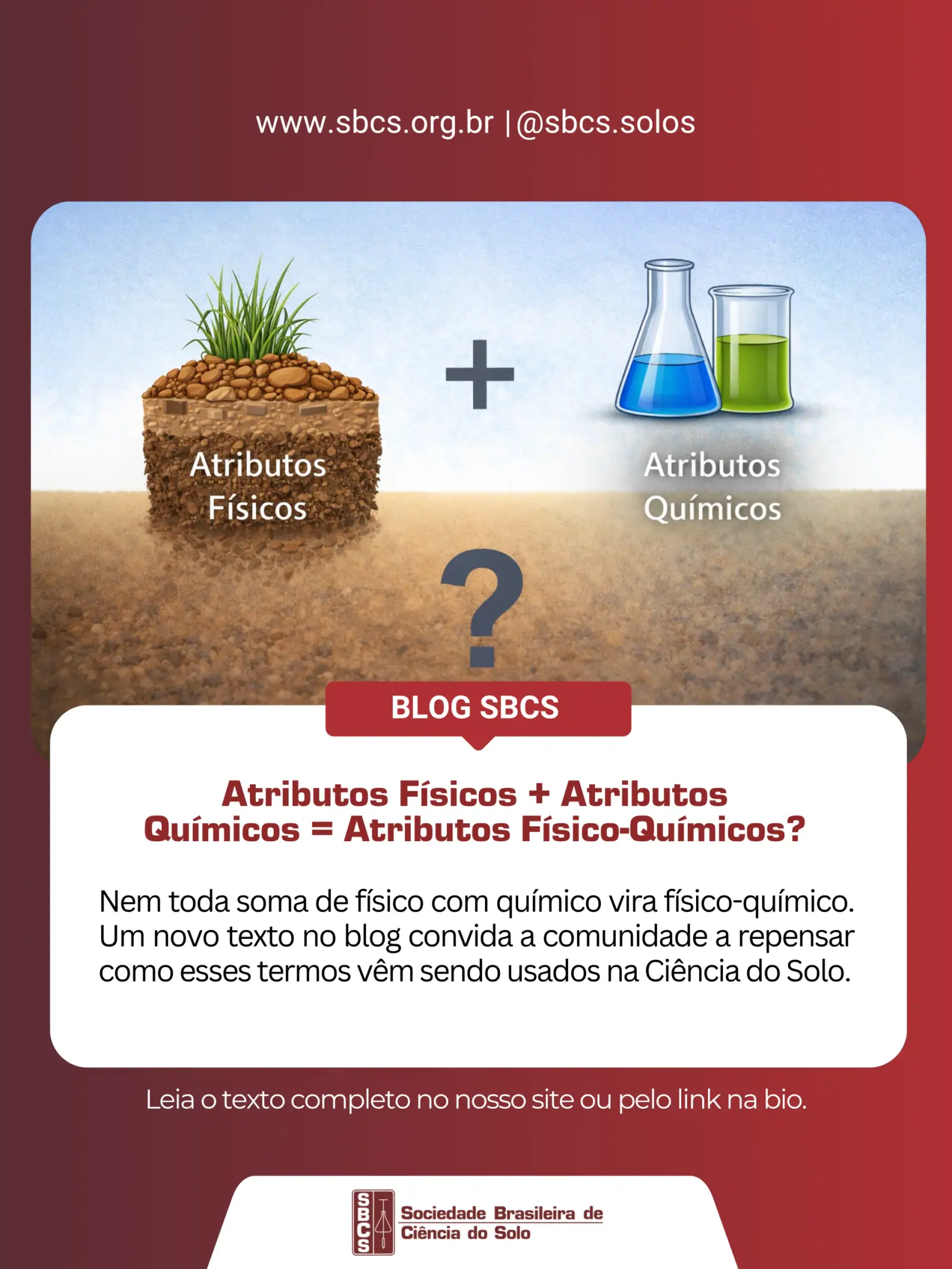
Physical Attributes + Chemical Attributes = Physicochemical Attributes?
A brief reflection on the use and application of these terms in Soil Science Luiz Francisco da Silva Souza Filho1, Maria Eugenia Ortiz Escobar2 It has become increasingly common in scientific publications – including…
Read more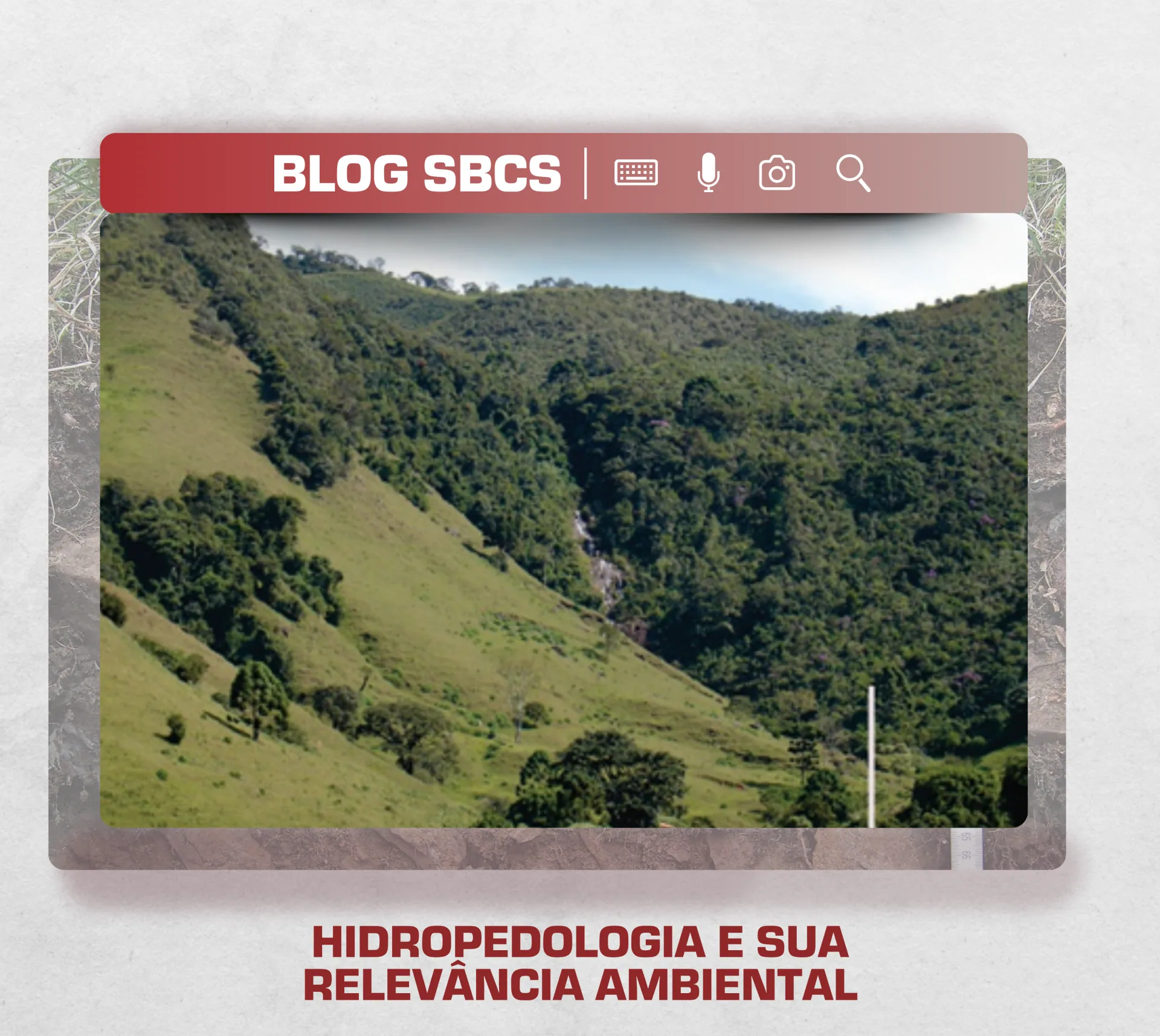
HYDROPEDOLOGY AND ITS ENVIRONMENTAL RELEVANCE
Carlos Rogério de Mello¹, Luís Carlos Timm² and Nilton Curi³ Introduction The water cycle is the most important phenomenon for life on Earth. Our planet holds approximately 1,380 Mkm³ of water, covering around 70% of…
Read more
Climate emergency and carbon in Brazilian agriculture
Opinion Article Ladislau Martin Neto ¹ Introduction Agriculture, which is fundamental from a social, economic, and environmental perspective, is responsible for approximately 20% of anthropogenic greenhouse gas (GHG)…
Read more