
Cover crops influence the physical hydric quality of a tropical sandy soil under no-tillage cotton cropping
Publicado em
HIGHLIGHTS
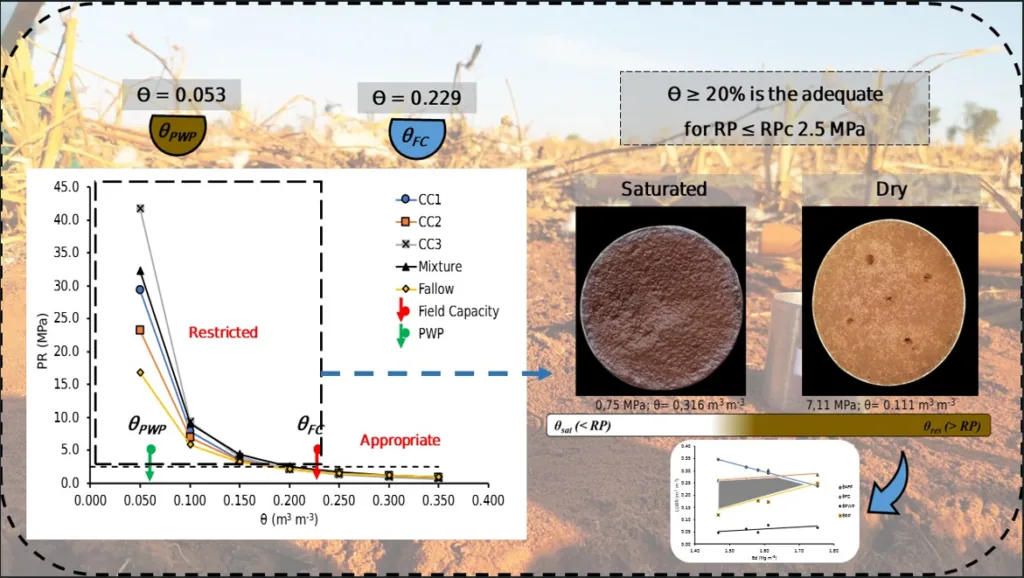
The results of this study suggest that from the physical properties of the soil analysed, only the PR was influenced by the use of cover crops.
At the surface physical limitations due to aeration occurred with Bd > 1.65 Mg m-3, while in the subsurface it occurred with Bd > 1.70 Mg m-3.
Soil water contents greater 0.20 m3 m-3 provided soil penetration resistance values lower 2.5 MPa.
ABSTRACT
Reduced stability and structural resilience expose sandy soils to physical degradation under intensive production systems. This study aimed to evaluate the influence of different cover crops (CC) under no-tillage system (NTS) cotton cropping, grown either individually or in combination, on the soil physical quality (SPQ) of a sandy loam Oxisol (Latossolo) in southeastern Brazil. To quantify the effects of CC on soil physical quality indicators, an experiment in randomized blocks design was implemented with the treatments: CC1: single cultivation of Ruzi grass; CC2: Intercropping of Pearl Millet + Ruzigrass; CC3: Intercropping of Pearl Millet + Velvet bean; CCMixture: Intercropping of Ruzi grass, Pearl Millet and Velvet bean; and Control: maintenance of spontaneous plants. Undisturbed samples were taken from layers 0.00-0.10, 0.10-0.20, 0.20-0.40 and 0.40-0.60 m, in which were determined the soil bulk density (Bd), total porosity (TP), available water (AW), soil penetration resistance (PR) and the least limiting water range (LLWR). According to the multivariate analyses, the CC2 treatment resulted in better SPQ compared to the other treatments. The LLWR, air-filled porosity (θAFP), and AW were responsible for differentiating the CC2 treatment compared to the other treatments evaluated. Regardless of treatments, values of Bd> 1.75 Mg m-3 result in loss of SPQ due to the significant increase in PR and decreases in AW and LLWR. In the CC3 and Control, there was a physical impediment caused by the increase in Bd in the 0.10-0.20 m layer, which could result in the confinement of cotton roots to the surface, making them more susceptible to water stress. Soil PR reached values greater than 2.5 MPa for water contents lower than the θPWP in most treatments. In treatment CC3, for water contents equivalent to the θPWP, the PR did not exceed 6 MPa, while for the other treatments, the PR reached values greater than 10 MPa. Only the PR was influenced using CC. Soil moisture is considered crucial to maintain PR below impeding values, determining the control of the physical quality of this sandy soil.
Read articleVeja também
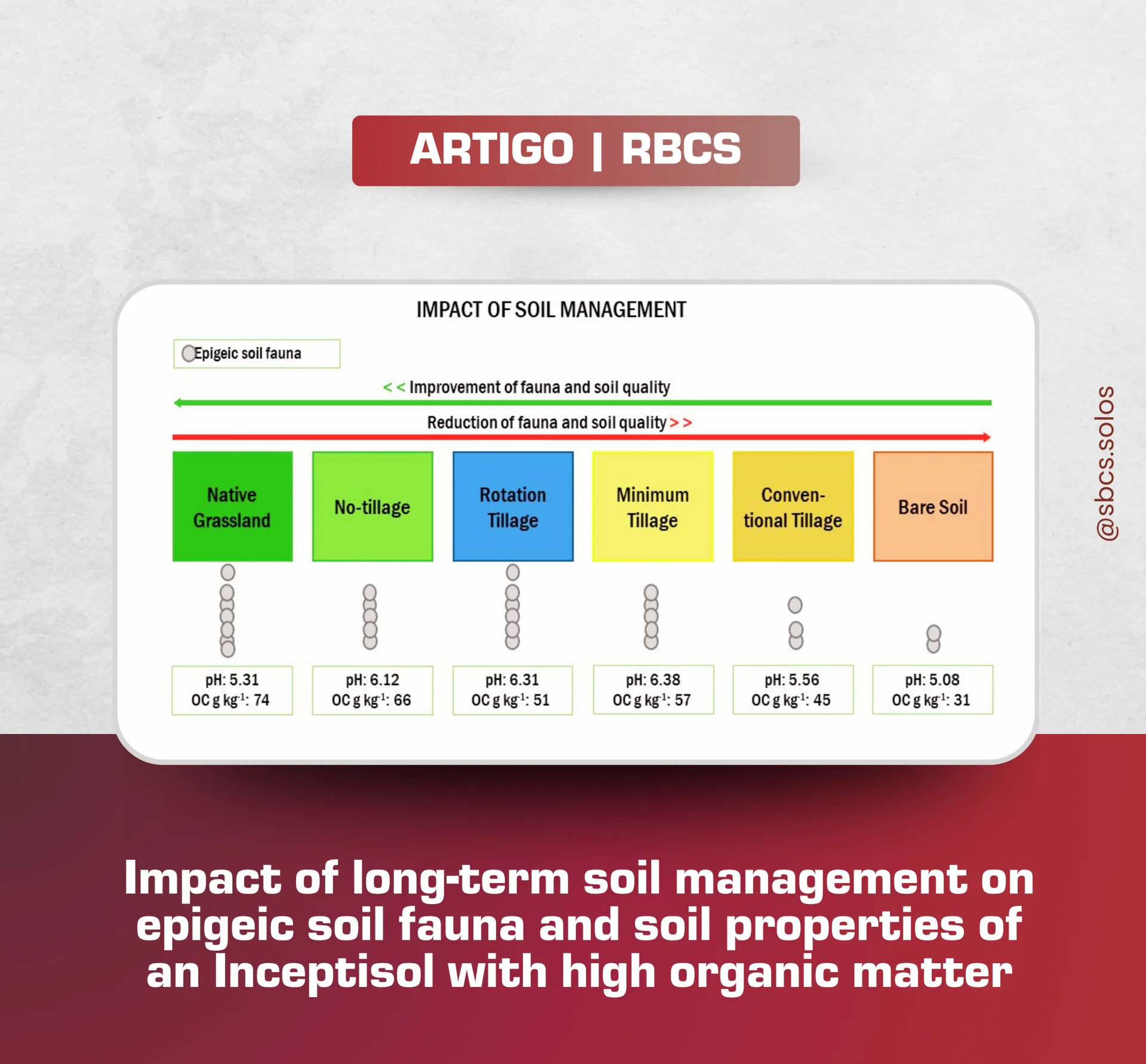
Impact of long-term soil management on epigeic soil fauna and soil properties of an Inceptisol with high organic matter
📘 Novo artigo na Revista Brasileira de Ciência do Solo (RBCS) Impact of long-term soil management on epigeic soil fauna and soil properties of an Inceptisol with high organic matter Autores: Neuro Hilton Wolschick,…
Leia mais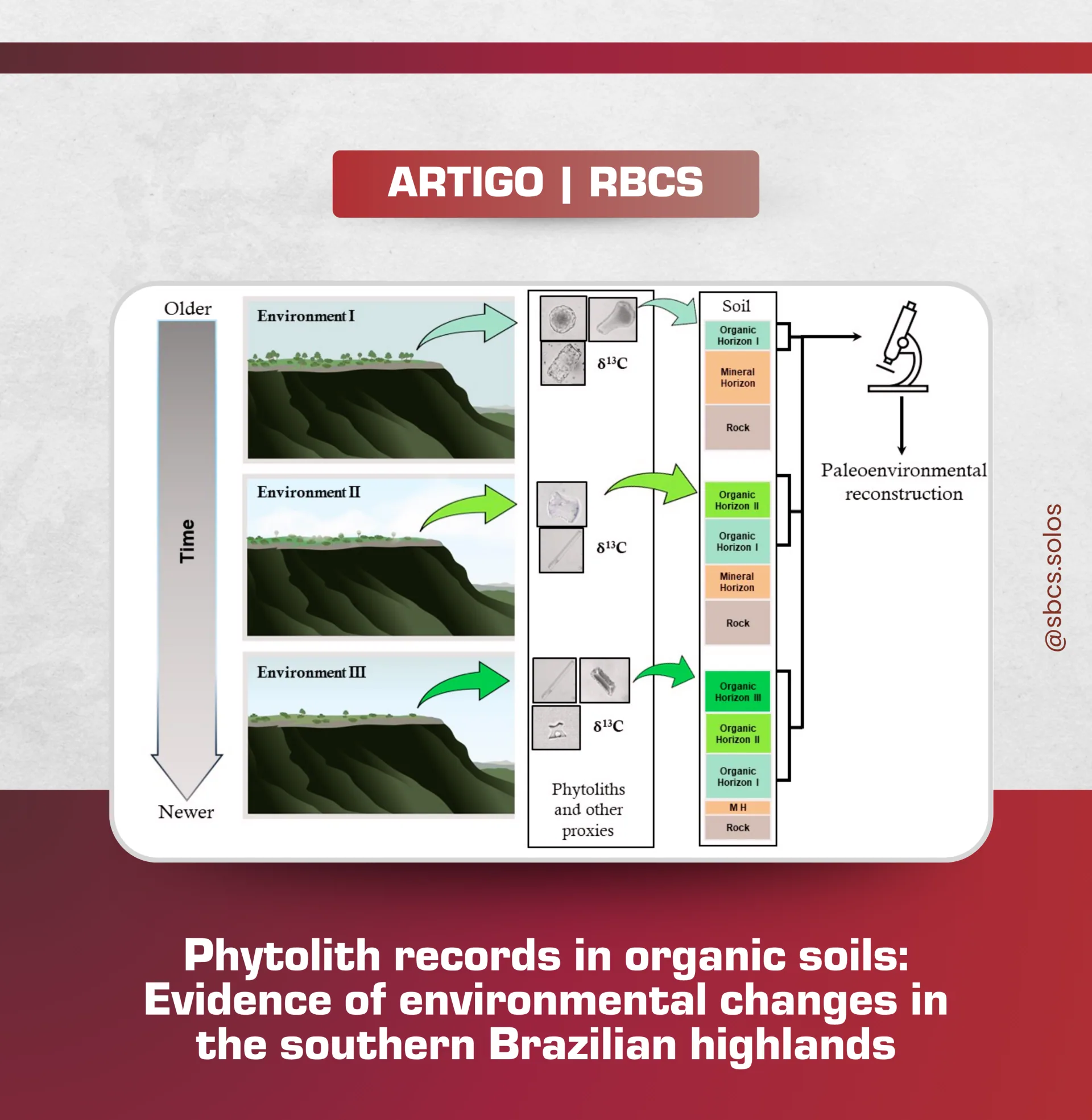
Revista Brasileira de Ciência do Solo (RBCS)
Tem artigo novo na Revista Brasileira de Ciência do Solo (RBCS)! Phytolith records in organic soils: Evidence of environmental changes in the southern Brazilian highlands Autores: João Pedro Comendouros Scott, Carlos…
Leia mais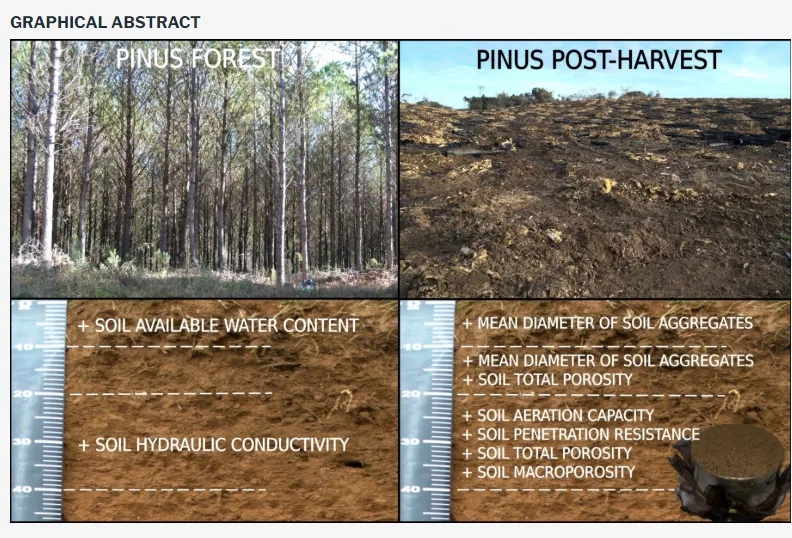
Mechanized harvesting of a Pinus taeda L. forest does not impair the physical properties of a Nitossolo Bruno
HIGHLIGHTS The physical properties of the Nitossolo Bruno showed small changes between the pine forest area and the post-harvest forest area. Mechanized harvesting in the forest area does not compromise the soil water…
Leia mais