Critical levels and fertility classes of soils with high-activity clay in the Brazilian semi-arid region
Publicado em
HIGHLIGHTS
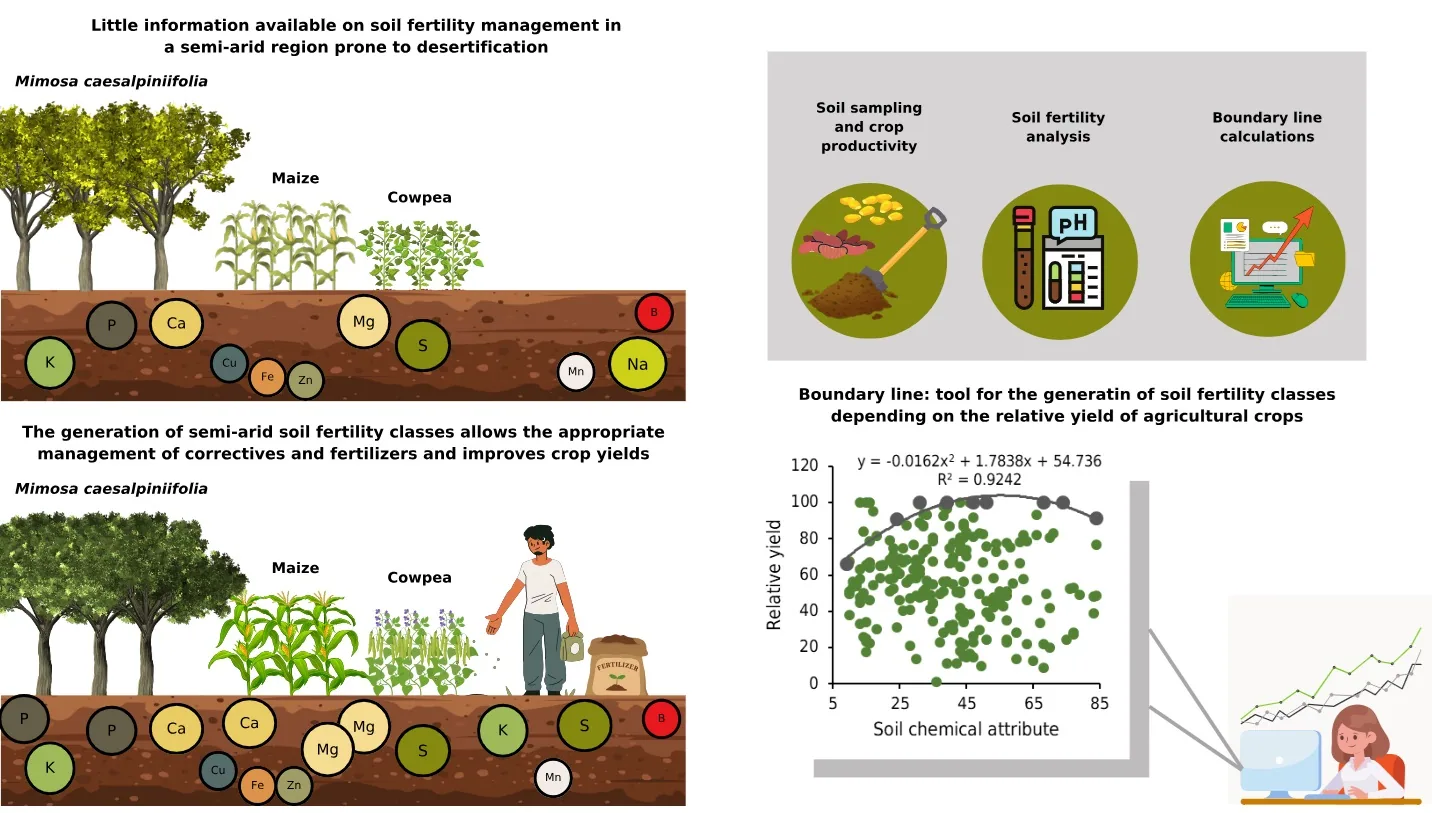
Boundary line method optimizes nutrient management to obtain high agricultural yields
Method based on relative yield generates five classes of interpretation of fertility
P, K and Ca show concentrations adequate higher to the reference literature
Disregarding the high clay activity in the semi-arid region limits the yield of crops
ABSTRACT
Soil fertility evaluation is important for adopting conservation management and adequate nutrient supply. The objective of this study was to identify critical levels and soil fertility classes using the boundary line method for rainfed crops (corn, cowpea and sabiá [Mimosa caesalpiniifolia]) in the Brazilian semi-arid region. A database of 226 soil fertility analyses of samples from the 0.00-0.20 m soil layer, and corn, cowpea and sabiá yields from Ceará State was used to generate interpretation classes (at 80 and 95 % of maximum yield). In a scatter plot, soil nutrient concentrations (x-axis) and relative crop yields (y-axis) were correlated, and the border points fitted to a quadratic model. Proposed interpretation classes were classified as very low, low, adequate, high and very high, except for Na+, whose adequate class was considered tolerable. Generated models showed coefficients of determination (R2) for the chemical properties ranging from 0.54 to 0.92. Based on the interpretation classes, the critical level was determined as 6.3 for pH, 10.8 g dm-3 for OM, 20.9 mg dm-3 for P, 81 mg dm-3 for K, 55 mmolc dm-3 for Ca2+, 24 mmolc dm-3 for Mg2+ and 8 mg dm-3 for S-SO42-. Interpretation classes for soils with high-activity clay in the Brazilian semi-arid region were superior to those in the reference literature. Boundary line method established fertility classes and critical levels for soil chemical properties in more than one crop, using the concept of relative yield.
Read articleVeja também
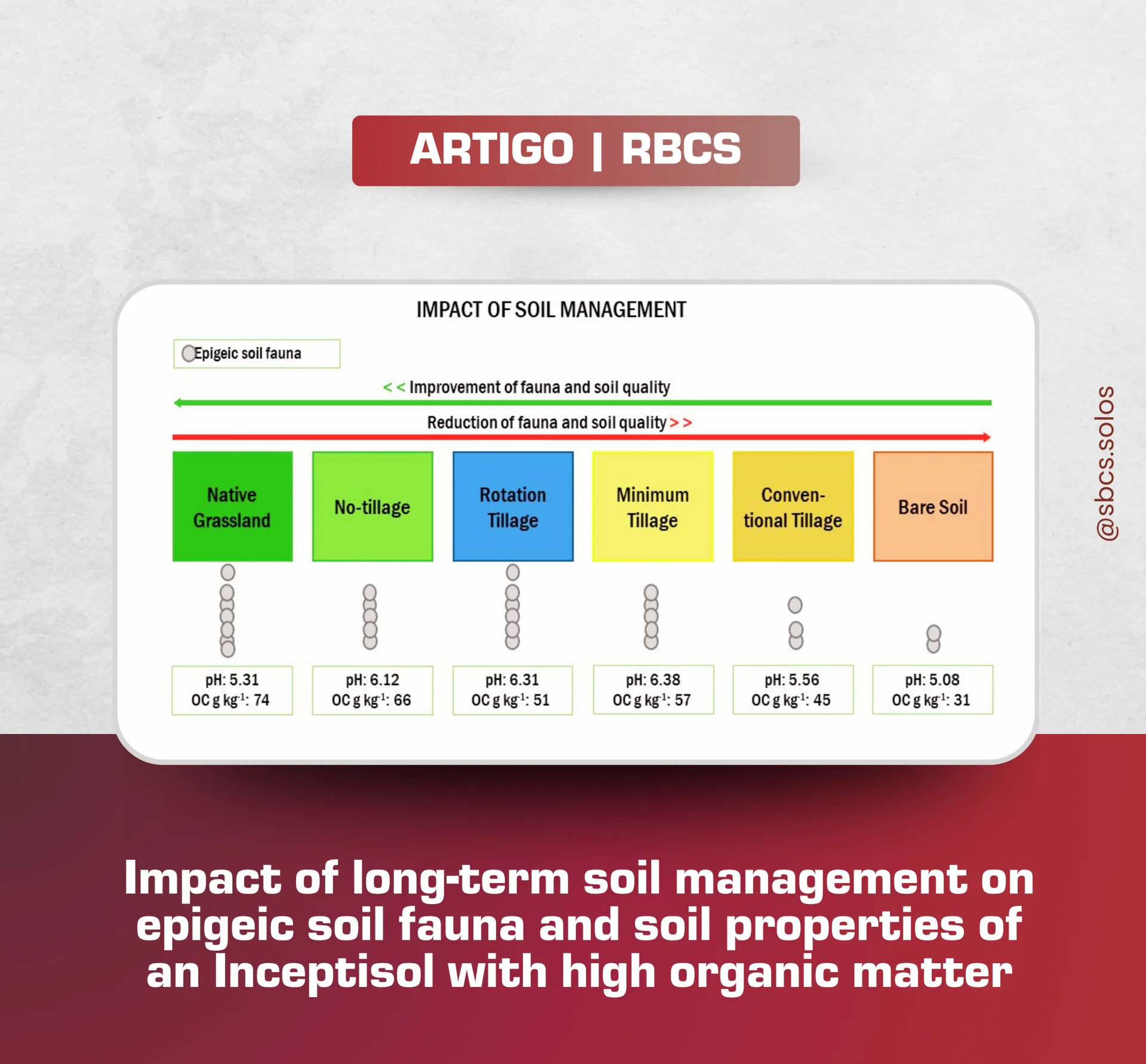
Impact of long-term soil management on epigeic soil fauna and soil properties of an Inceptisol with high organic matter
📘 Novo artigo na Revista Brasileira de Ciência do Solo (RBCS) Impact of long-term soil management on epigeic soil fauna and soil properties of an Inceptisol with high organic matter Autores: Neuro Hilton Wolschick,…
Leia mais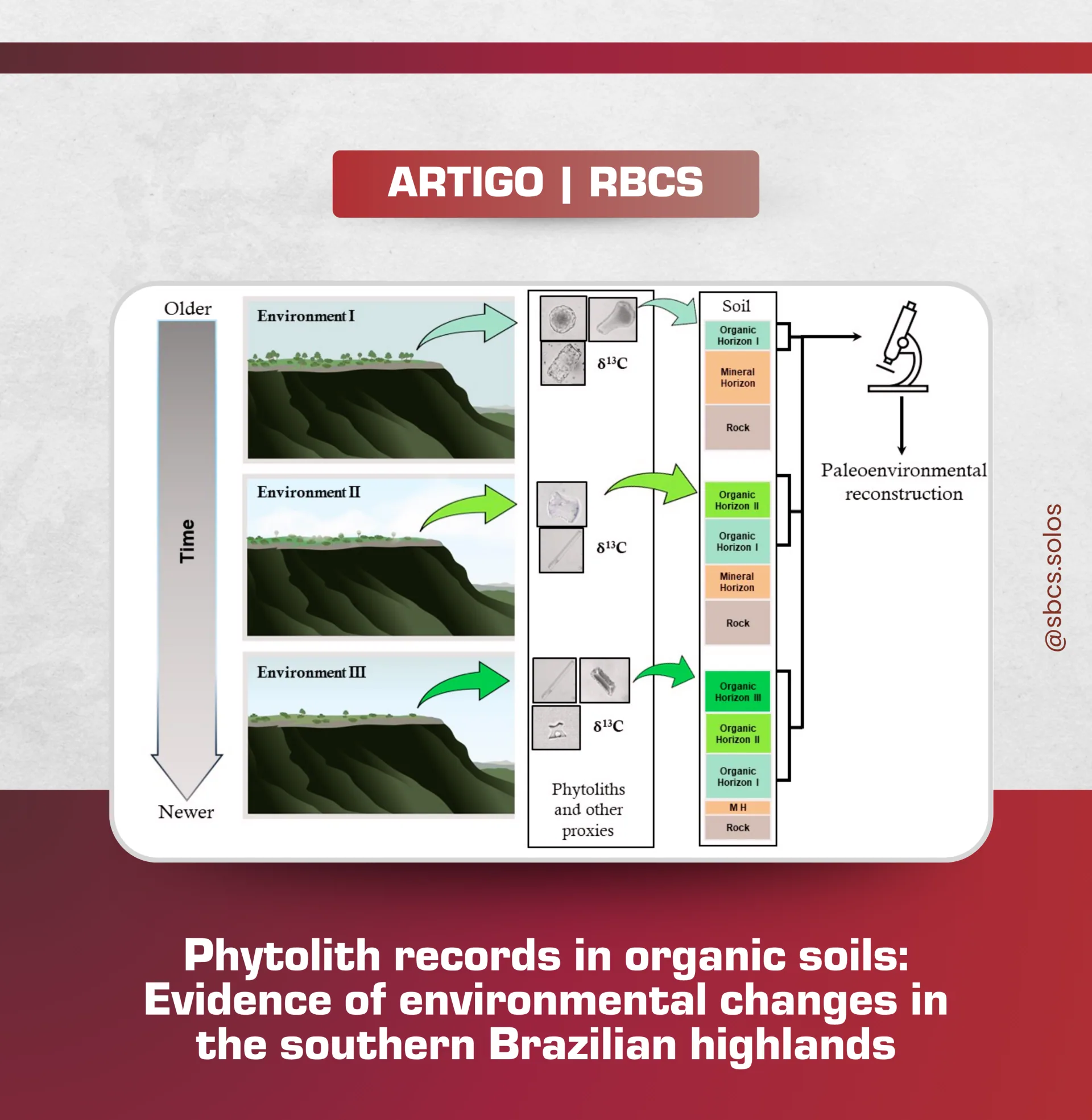
Revista Brasileira de Ciência do Solo (RBCS)
Tem artigo novo na Revista Brasileira de Ciência do Solo (RBCS)! Phytolith records in organic soils: Evidence of environmental changes in the southern Brazilian highlands Autores: João Pedro Comendouros Scott, Carlos…
Leia mais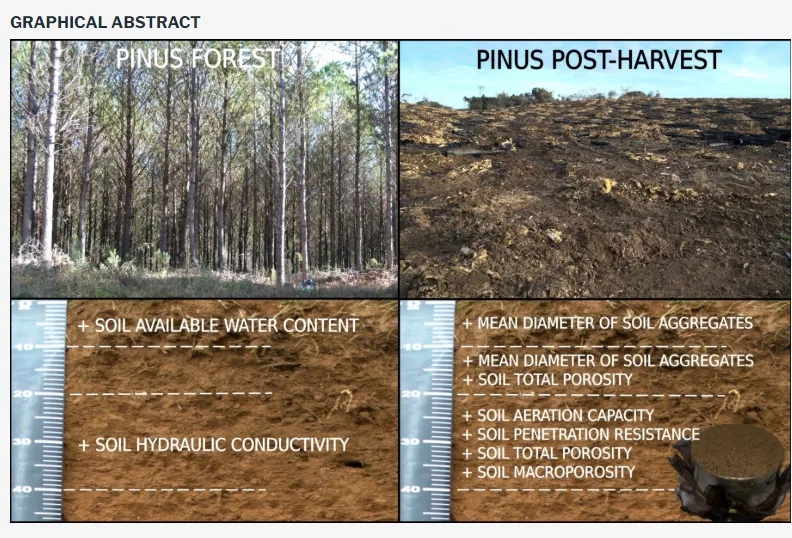
Mechanized harvesting of a Pinus taeda L. forest does not impair the physical properties of a Nitossolo Bruno
HIGHLIGHTS The physical properties of the Nitossolo Bruno showed small changes between the pine forest area and the post-harvest forest area. Mechanized harvesting in the forest area does not compromise the soil water…
Leia mais