
Cropping and soil management systems effects on soil organic matter fractions in diversified agricultural fields in the Cerrado
Publicado em
HIGHLIGHTS
Vegetation diversity helps maintain soil quality.
Soil organic matter compartmentalization can be used to evaluate agricultural systems.
Water-floatable light organic matter was effective in evaluating ]soil management.
ABSTRACT
Soil organic matter (SOM) dynamics can be significantly influenced by various cultivation practices, particularly under environmental and edaphic conditions that enhance and accelerate the transformations of organic materials such as straw, root biomass, and organic fertilizers. This study aimed to evaluate the impact of different cultivation and soil management systems on SOM fractions in agricultural areas of the Cerrado Goiano region. The research was conducted across three areas with diverse production systems: 1) BV area, including soybean monoculture (SM01), integrated crop-livestock-forest (ICLF01), pasture (PA01), and Cerrado vegetation (NV01); 2) ML area, featured soybean-corn monoculture succession (SMS02), agroforestry (AF02), pasture (PA02), and native Cerrado vegetation (NV02); and 3) IF area, comprised soybean-corn succession (SMS03), integrated livestock-forest (ILF03), pasture (PA03), and native Cerrado vegetation (NV03). Disturbed and undisturbed soil samples were collected from two layers: 0.00-0.05 and 0.05-0.10 m. Samples were analyzed for total organic carbon, carbon storage, and SOM physical (granulometric and densimetric) and chemical (fulvic acid, humic acid, and humin) fractionations of soil organic matter (SOM). Additionally, water-floatable light organic matter (LOM), the carbon management index, and its components were determined. Soil organic matter fractions were similarly influenced by the characteristics of cultivation and management systems. However, there were more pronounced differences between systems in the BV area compared to the ML and IF areas. Among the parameters studied, LOM proved to be the most efficient and effective in distinguishing SOM input across different cultivation and soil management systems, particularly in pasture systems.
Read articleVeja também
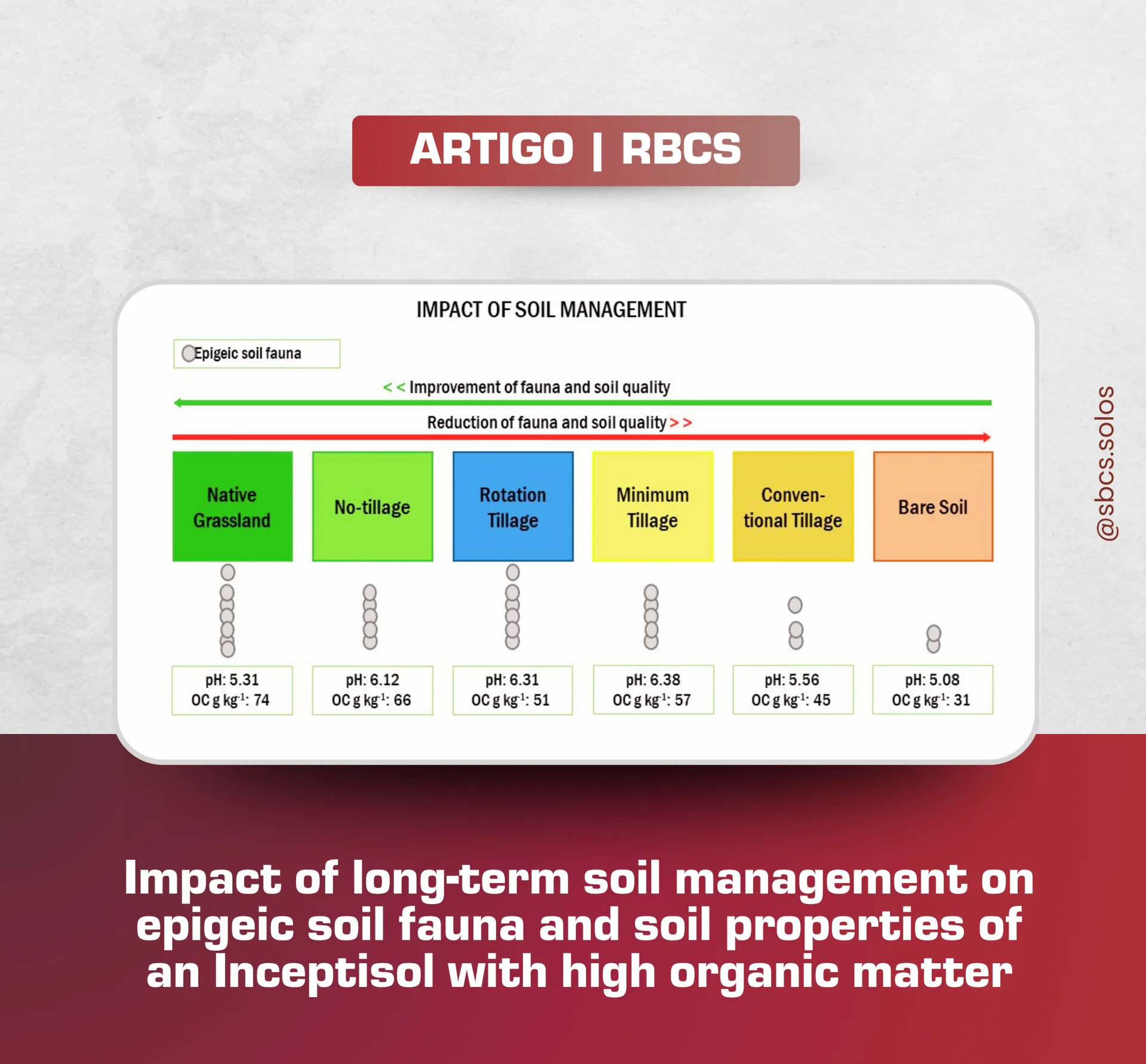
Impact of long-term soil management on epigeic soil fauna and soil properties of an Inceptisol with high organic matter
📘 Novo artigo na Revista Brasileira de Ciência do Solo (RBCS) Impact of long-term soil management on epigeic soil fauna and soil properties of an Inceptisol with high organic matter Autores: Neuro Hilton Wolschick,…
Leia mais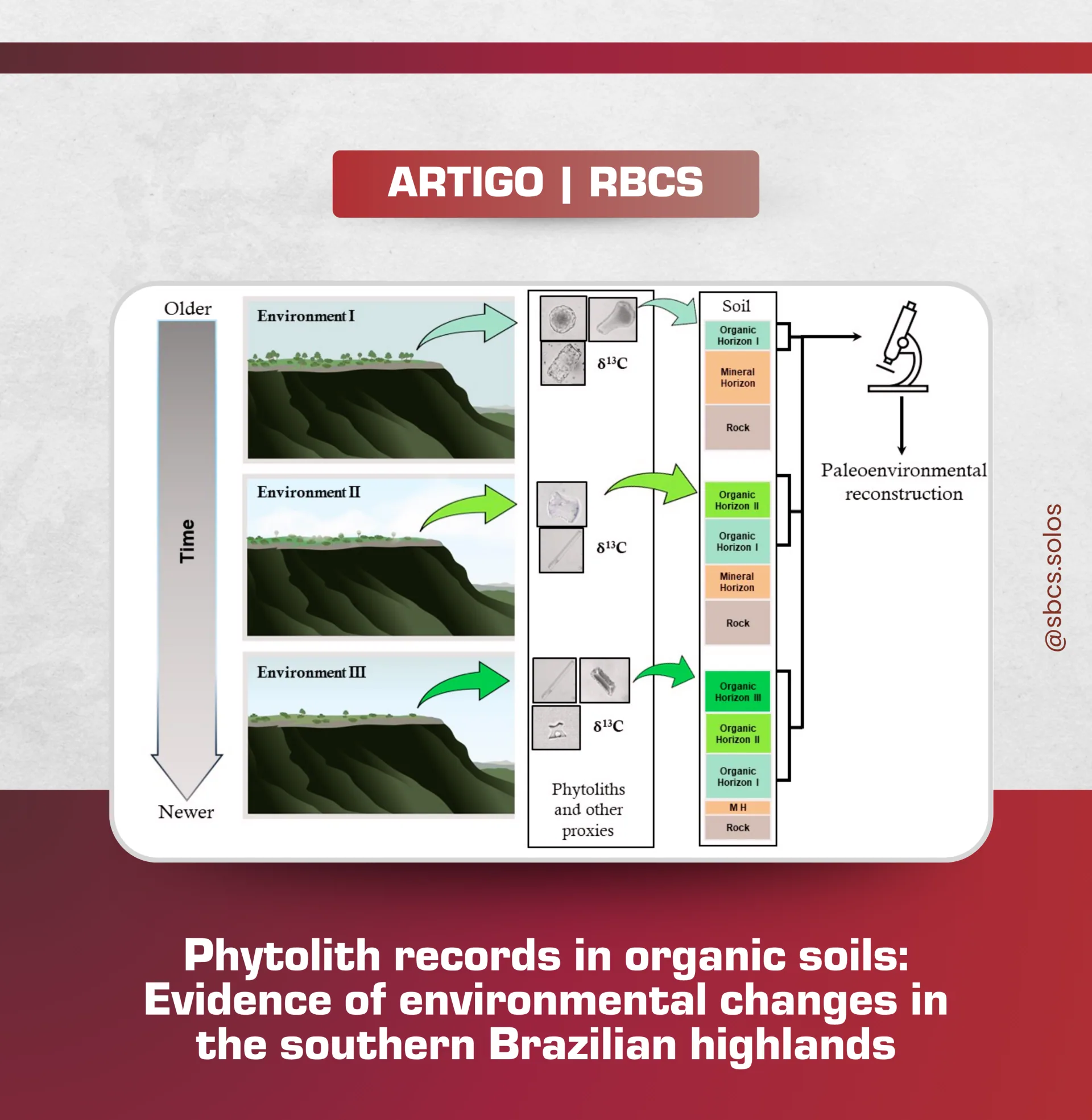
Revista Brasileira de Ciência do Solo (RBCS)
Tem artigo novo na Revista Brasileira de Ciência do Solo (RBCS)! Phytolith records in organic soils: Evidence of environmental changes in the southern Brazilian highlands Autores: João Pedro Comendouros Scott, Carlos…
Leia mais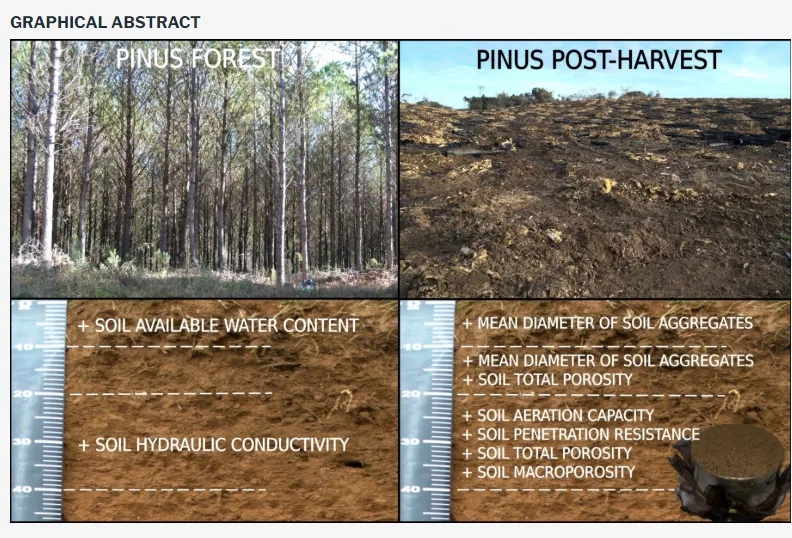
Mechanized harvesting of a Pinus taeda L. forest does not impair the physical properties of a Nitossolo Bruno
HIGHLIGHTS The physical properties of the Nitossolo Bruno showed small changes between the pine forest area and the post-harvest forest area. Mechanized harvesting in the forest area does not compromise the soil water…
Leia mais