
Macrofauna and soil properties in agroforestry system and secondary forest
Publicado em
HIGHLIGHTS
Genotypes of Saccharum Complex differ in growth response upon bacterial inoculation.
Agroforestry systems enhance soil health in fragile soil.
The management in agroforestry systems is favorable for soil macrofauna.
Soil fauna can act as a soil quality indicator in agroforestry systems.
ABSTRACT
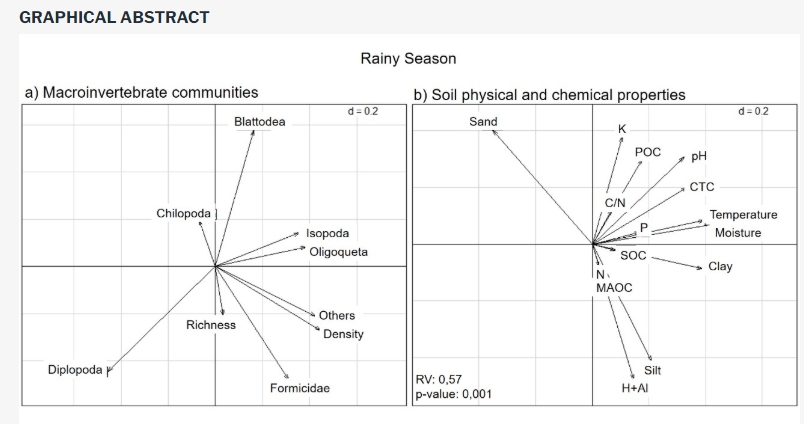
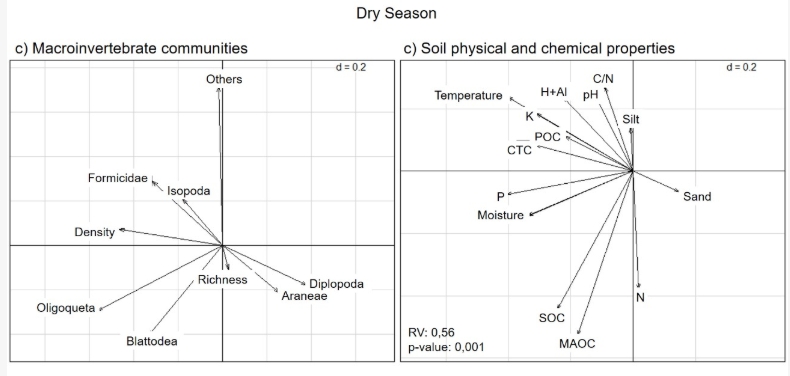
Atlantic Forest devastation has resulted in the search and introduction of management capable of promoting and reestablishing the quality and sustainability of the ecosystem. Agroforestry systems (AS) are recognized for many benefits due to their management. This study compares an agroforestry system macrofauna and physical and chemical soil properties to those of a secondary forest area in the Atlantic Forest biome in southeast Brazil. Agroforestry system with 8 years of establishment and the regenerating subcaducifolious tropical forest fragment with 28 years were examined. Samplings were conducted in two periods of the year (rainy and dry seasons) to evaluate physical and chemical soil fertility-associated properties, as well as soil organic matter (SOM) fractions and biological aspects (macrofauna). Higher clay content, moisture levels, basic cations, and greater values of the sorption complex, diversity indices, and uniformity in macrofauna were observed in the agroforestry plots. Agroforestry systems increased the levels of the most labile fraction of soil organic matter (SOM) compared to the forest fragment. Higher abundance, diversity indices, and evenness of fauna were observed in the agroforestry plots during both seasons. In terms of multivariate analyses, a higher correlation was observed among fauna, carbon fractions, P, K+, pH, clay, potential acidity, moisture, and temperature in the Agroforestry plots. In general, AS promoted a positive relationship between physical and chemical properties and the macrofauna community of soil invertebrates, in a similar way and sometimes superior to the forest, confirming the study hypothesis and demonstrating the efficiency of management in maintaining soil properties and, consequently, ecosystem services.
Read articleVeja também
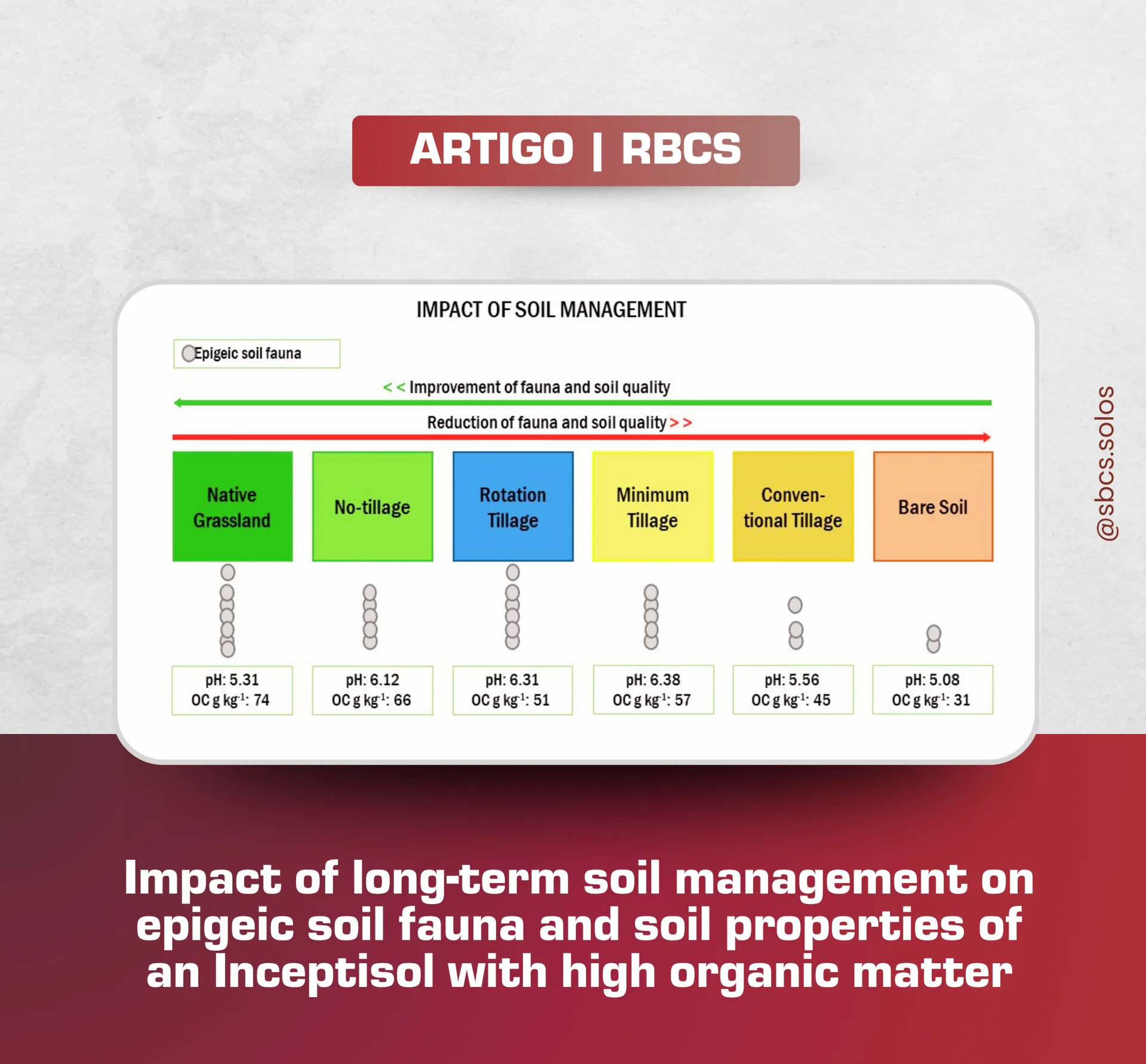
Impact of long-term soil management on epigeic soil fauna and soil properties of an Inceptisol with high organic matter
📘 Novo artigo na Revista Brasileira de Ciência do Solo (RBCS) Impact of long-term soil management on epigeic soil fauna and soil properties of an Inceptisol with high organic matter Autores: Neuro Hilton Wolschick,…
Leia mais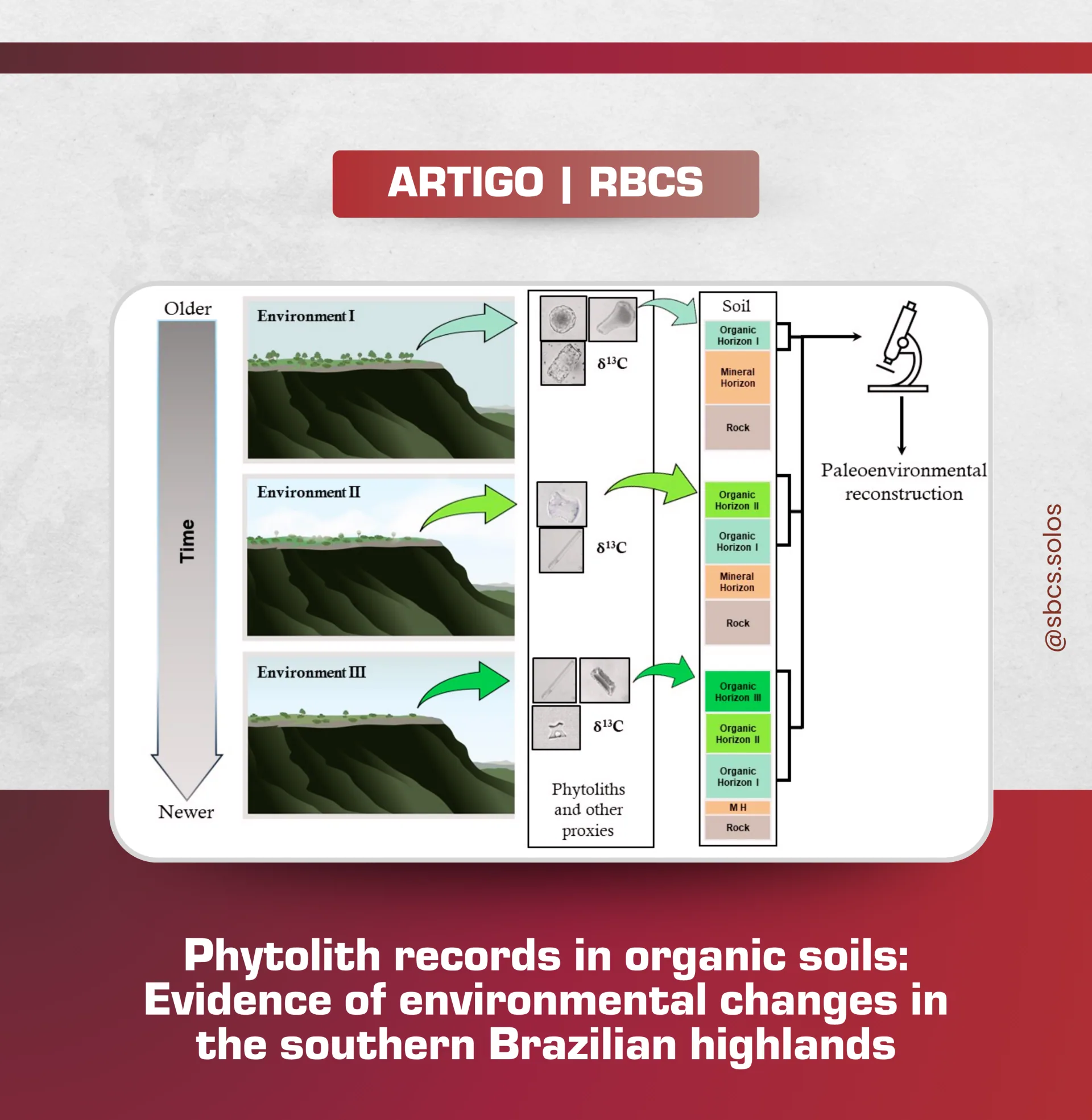
Revista Brasileira de Ciência do Solo (RBCS)
Tem artigo novo na Revista Brasileira de Ciência do Solo (RBCS)! Phytolith records in organic soils: Evidence of environmental changes in the southern Brazilian highlands Autores: João Pedro Comendouros Scott, Carlos…
Leia mais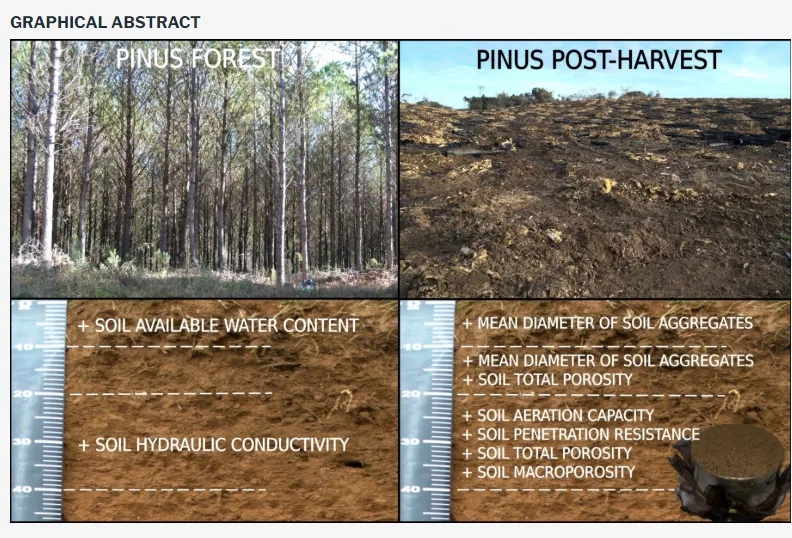
Mechanized harvesting of a Pinus taeda L. forest does not impair the physical properties of a Nitossolo Bruno
HIGHLIGHTS The physical properties of the Nitossolo Bruno showed small changes between the pine forest area and the post-harvest forest area. Mechanized harvesting in the forest area does not compromise the soil water…
Leia mais