
Potassium distribution in soil profiles under no-tillage system
Publicado em
HIGHLIGHTS
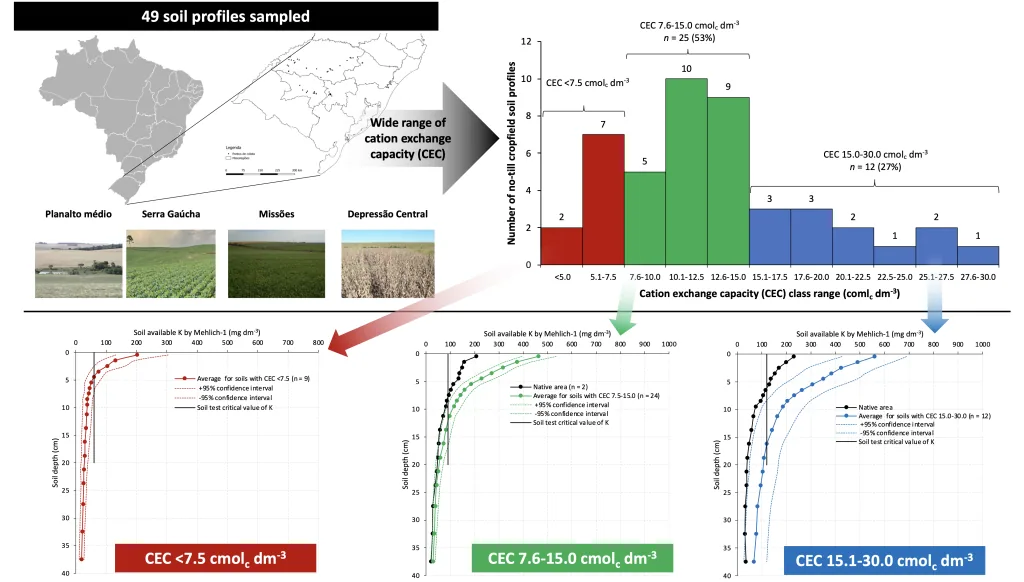
Study reveals K accumulation in upper soil layers under no-tillage systems.
Findings emphasize deep K fertilization to prevent surface runoff and erosion.
We suggest revising K availability diagnosis methods for no-tillage soil systems.
Highlights limited K migration, urging precise fertilization near root growth zones.
ABSTRACT
Potassium (K) vertical mobility in soils has often been overestimated and used as a rationale for recommending the broadcast application of this nutrient in fertility management programs, especially in soils with low cation exchange capacity (CEC). This study aimed to evaluate the vertical distribution of K in two land uses: areas with natural vegetation and crop fields managed under no-tillage (NT) fertilized with K. For this purpose, 49 soil profiles from the Brazilian subtropical state of Rio Grande do Sul were sampled, comprising 45 profiles from areas under NT management and four profiles from sites with natural vegetation. Soil samples were collected in 19 very thin layers: 1 cm layer in the first 10 cm, 2.5 cm layer from 10 to 25 cm, and 5 cm layer from 25 to 40 cm. Sampling sites were then grouped according to their CEC, categorized as < 7.5, 7.6-15.0, and 15.1-30.0 cmolc dm-3. Both crop fields and natural fields exhibit a similar vertical gradient model, characterized by a strong accumulation of K in the soil within the uppermost centimeters. This gradient is notably enhanced by the addition of K fertilizers, leading to a substantial portion of K becoming inaccessible to the root system. The optimal level of available K for the topsoil soils was found within an average range of 4 to 12.5 cm of soil depth. Consequently, K fertilization resulted in two main outcomes: (i) an excess of K in the upper soil layers, which increases the potential for K loss through surface erosion and runoff, and (ii) a limited migration of K towards the deeper soil layers until reaching the root growth zone. There is an urgent need to: (a) reaffirm the official recommendations of public agencies that the replacement of K exported by crops should be carried out in the furrow, along the sowing line, and as deep as possible; and (b) reconsider the diagnostic soil layer for assessing the status of K availability in soils under NT management.
Read articleVeja também
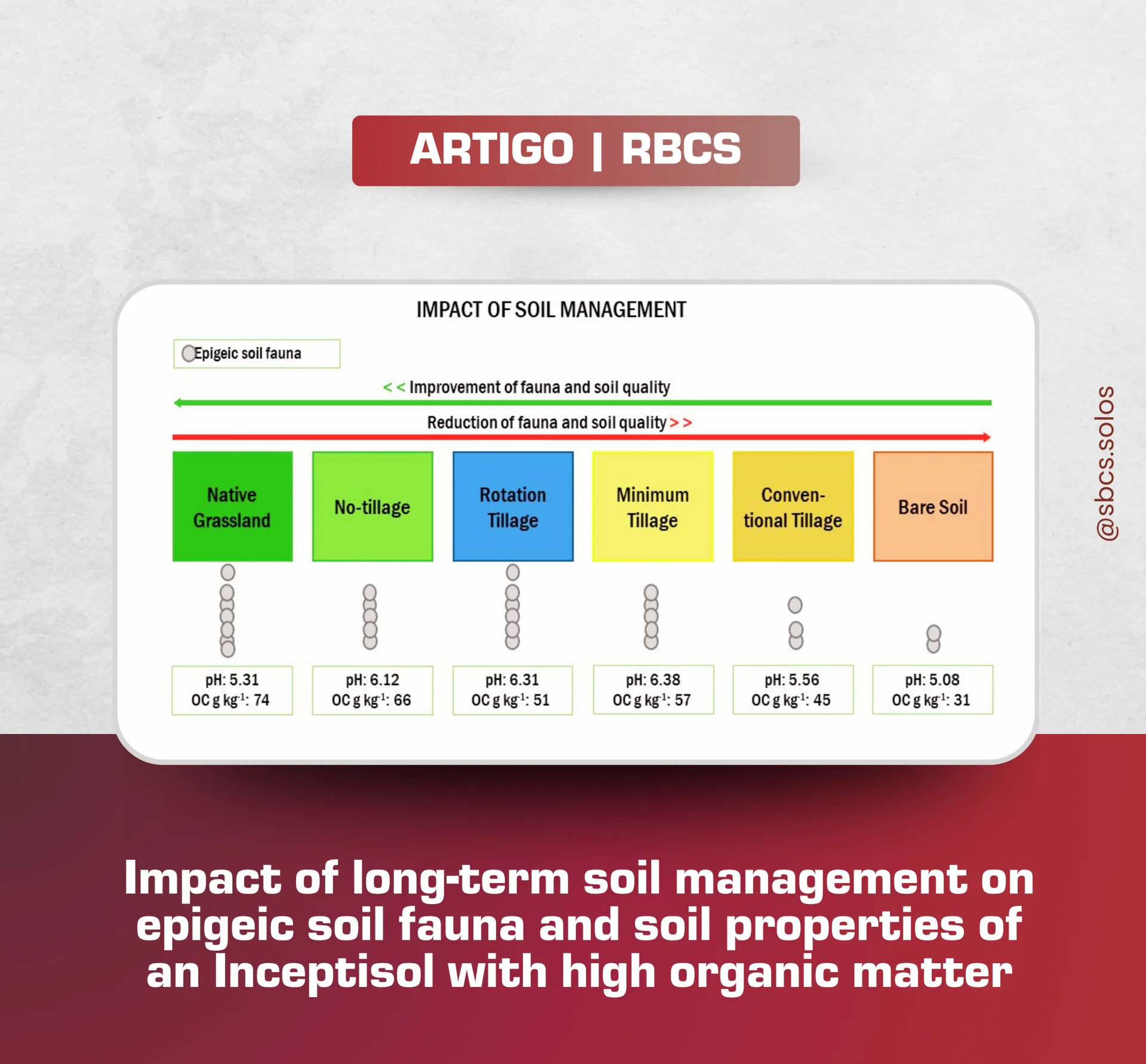
Impact of long-term soil management on epigeic soil fauna and soil properties of an Inceptisol with high organic matter
📘 Novo artigo na Revista Brasileira de Ciência do Solo (RBCS) Impact of long-term soil management on epigeic soil fauna and soil properties of an Inceptisol with high organic matter Autores: Neuro Hilton Wolschick,…
Leia mais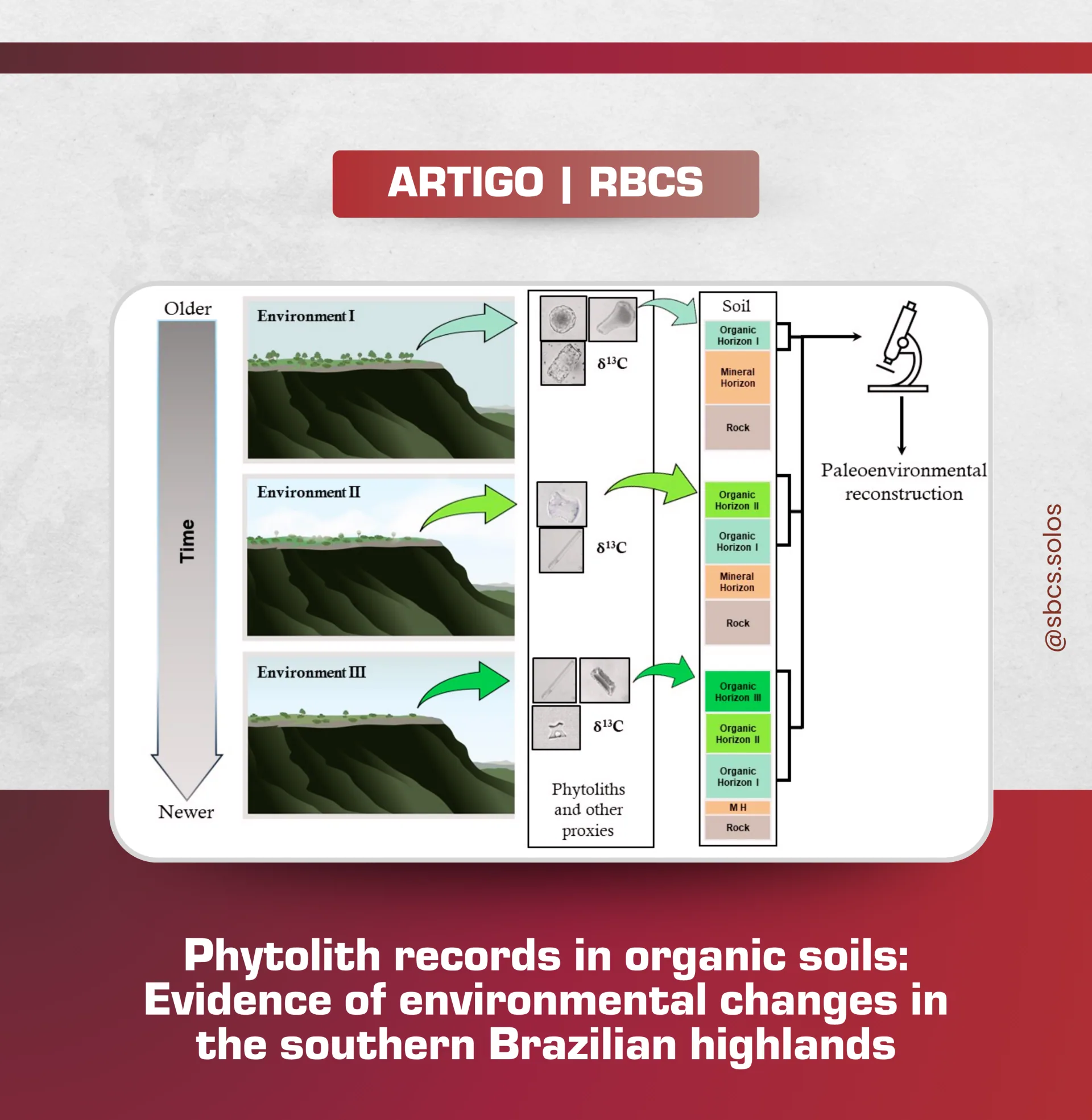
Revista Brasileira de Ciência do Solo (RBCS)
Tem artigo novo na Revista Brasileira de Ciência do Solo (RBCS)! Phytolith records in organic soils: Evidence of environmental changes in the southern Brazilian highlands Autores: João Pedro Comendouros Scott, Carlos…
Leia mais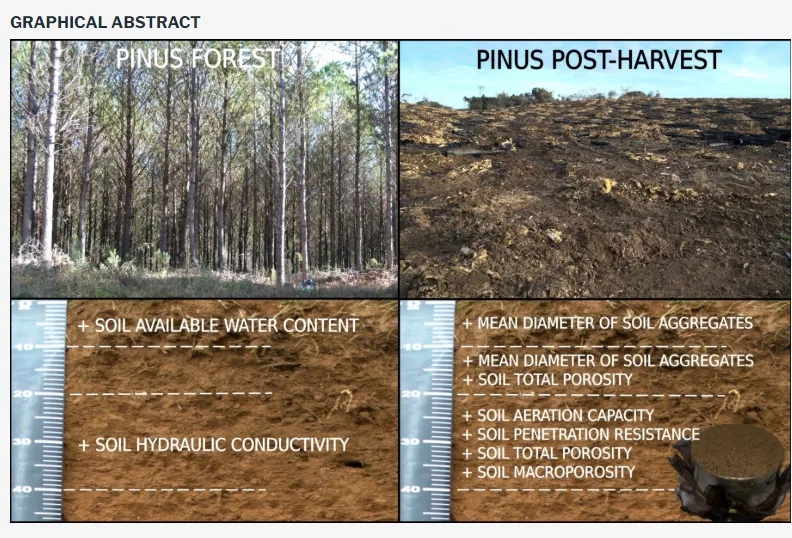
Mechanized harvesting of a Pinus taeda L. forest does not impair the physical properties of a Nitossolo Bruno
HIGHLIGHTS The physical properties of the Nitossolo Bruno showed small changes between the pine forest area and the post-harvest forest area. Mechanized harvesting in the forest area does not compromise the soil water…
Leia mais