
Stabilization of organic matter in soils: drivers, mechanisms, and analytical tools – a literature review
Publicado em
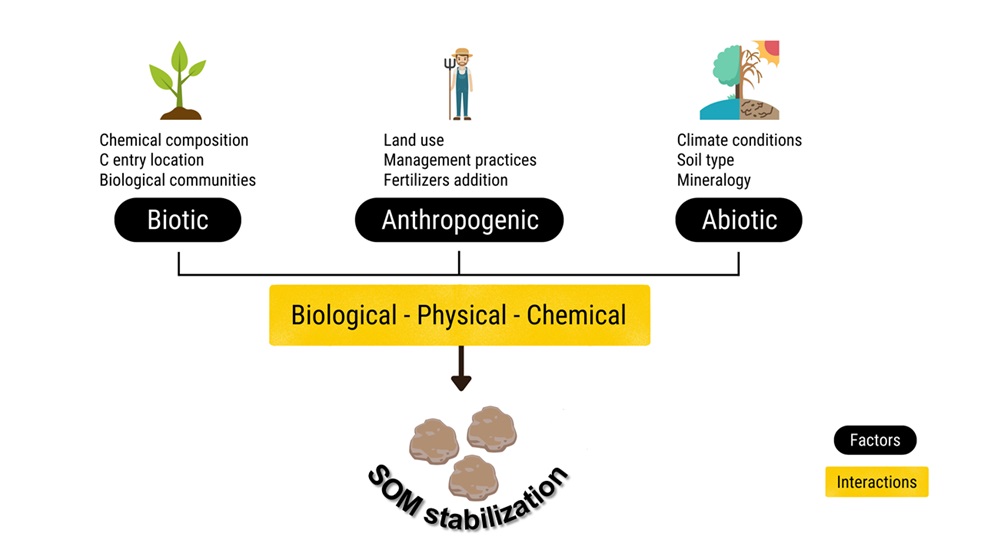
HIGHLIGHTS
Biochemical recalcitrance lost prominence as the physical protection and organo-mineral interaction mechanisms were investigated.
Soil fauna has a prominent role in decomposition and SOM stabilization across various scales.
Micro-scale analytical techniques, including those based on synchrotron radiation, propped the advances in mechanistic understandings of SOM stabilization.
Further research of SOM dynamics in the tropics is critical to the inception and implementation of management systems that favor C sequestration to mitigate climate change.
ABSTRACT
Soils are the largest terrestrial carbon (C) reservoir, and most of this C is retained as soil organic matter (SOM). Due to its ability to capture, stabilize, and store C for extended periods, soils are considered important allies in decarbonizing the atmosphere. The term ‘C stabilization’ includes a series of mechanisms or processes by which soil C is protected within soils and its losses are reduced through microbial decomposition or leaching. Due to their relevance in the global C cycle, C stabilization mechanisms have received intensive attention from the scientific community. As new analytic technologies push the boundaries of what was previously possible to know, new paradigms emerge. This literature review summarizes the current knowledge of the main mechanisms that may promote SOM stabilization. Factors that govern accumulation of SOM are also addressed. We highlight the role of organo-mineral associations and spatial inaccessibility of SOM due to occlusion within soil aggregates to understand the relative contribution of these mechanisms in different soil conditions (e.g., soil texture, mineralogy, and land- use). In addition, the contribution of cutting-edge approaches and analytical techniques to advance the understanding of SOM protection is presented. Modern techniques to evaluate SOM on a micro, nano, and molecular scale can contribute to the mechanistic understanding of SOM stabilization and the study and adoption of management strategies that maintain and increase C stocks in soils.
Read articleVeja também
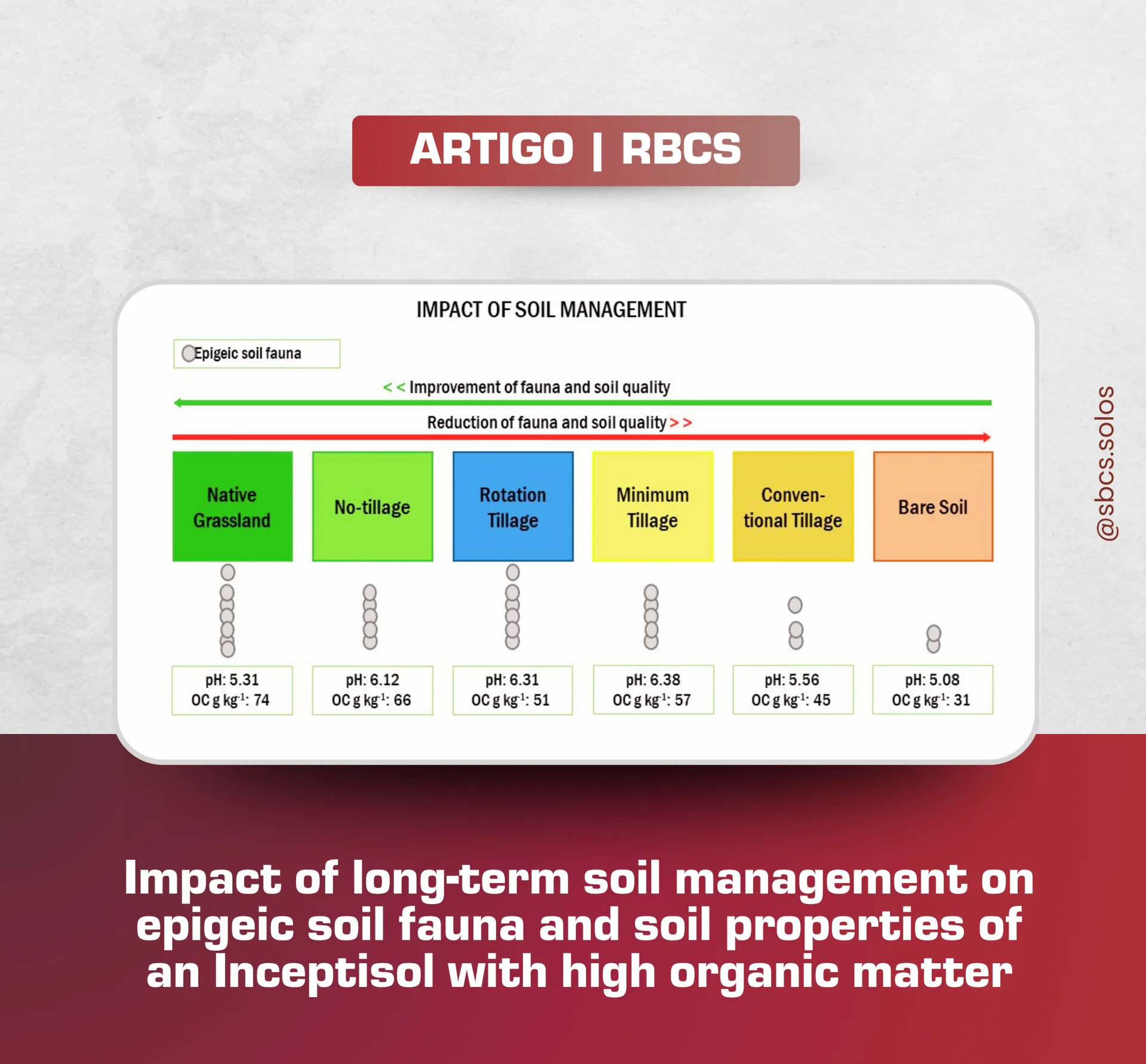
Impact of long-term soil management on epigeic soil fauna and soil properties of an Inceptisol with high organic matter
📘 Novo artigo na Revista Brasileira de Ciência do Solo (RBCS) Impact of long-term soil management on epigeic soil fauna and soil properties of an Inceptisol with high organic matter Autores: Neuro Hilton Wolschick,…
Leia mais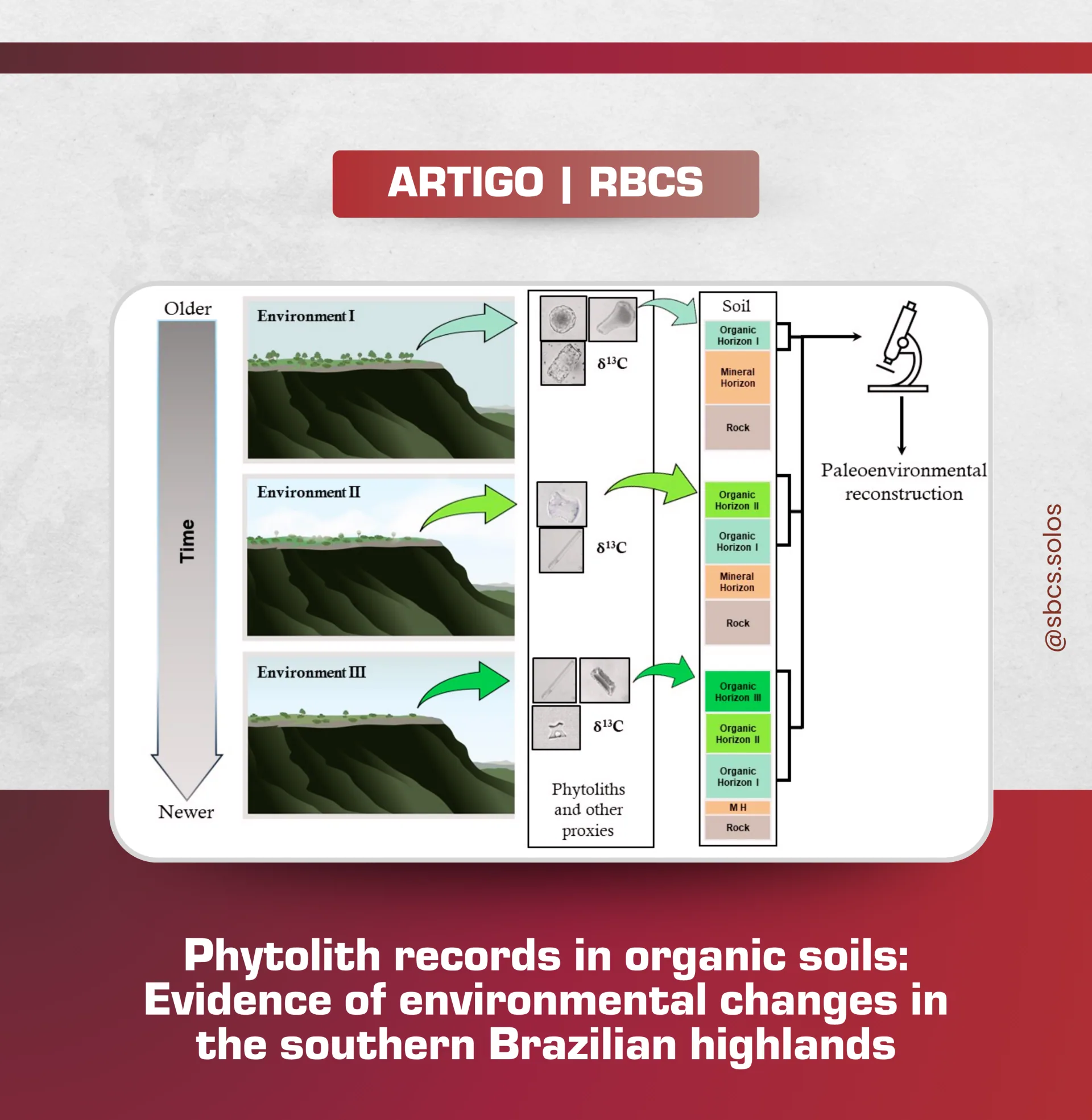
Revista Brasileira de Ciência do Solo (RBCS)
Tem artigo novo na Revista Brasileira de Ciência do Solo (RBCS)! Phytolith records in organic soils: Evidence of environmental changes in the southern Brazilian highlands Autores: João Pedro Comendouros Scott, Carlos…
Leia mais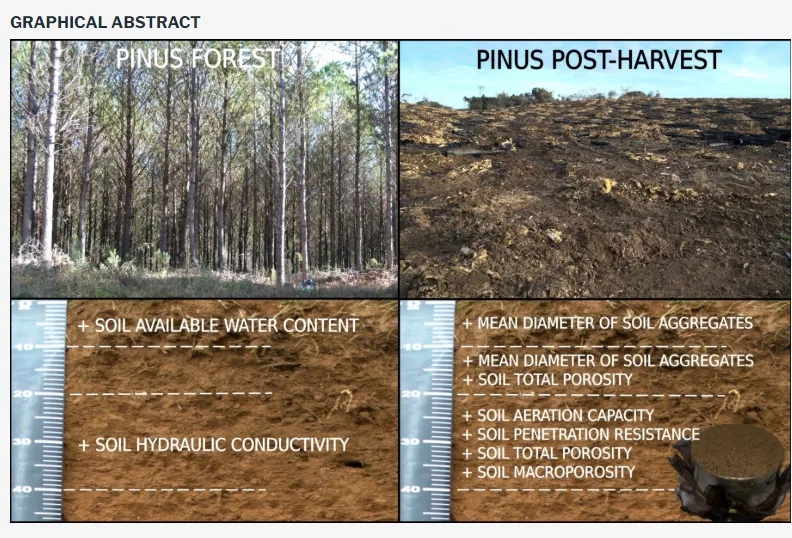
Mechanized harvesting of a Pinus taeda L. forest does not impair the physical properties of a Nitossolo Bruno
HIGHLIGHTS The physical properties of the Nitossolo Bruno showed small changes between the pine forest area and the post-harvest forest area. Mechanized harvesting in the forest area does not compromise the soil water…
Leia mais